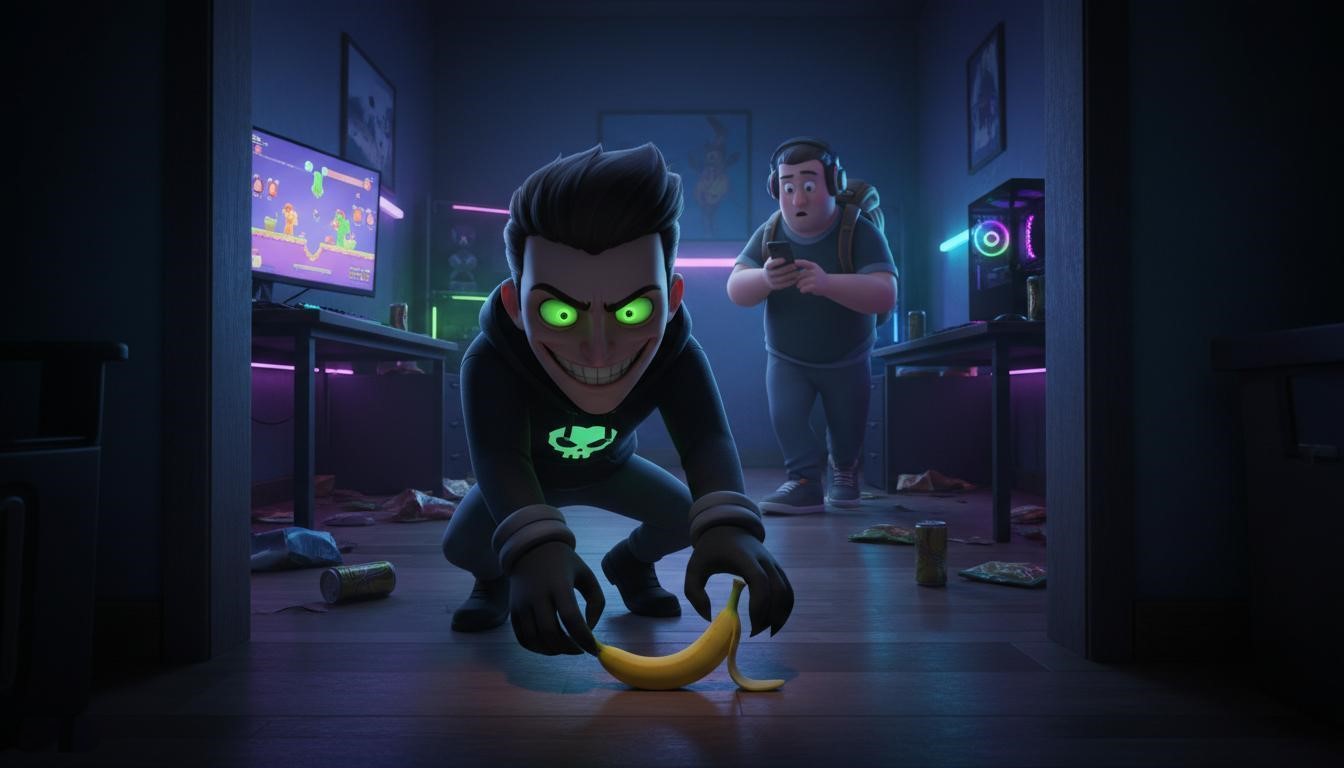
In gaming, a “troll” is a player who intentionally disrupts the game for their own amusement — from playful baiting to outright sabotage. The term distinguishes between competitive banter and genuine toxicity.
High-Fidelity Contextual Dialogues
Scene: League of Legends, ranked match
Player A: “Why is our support building damage items?” Teammate: “They’re trolling, just report after game” Player A: “We could’ve won if they actually tried” Teammate: “Some people get their fun from ruining games for others”
Scene: Twitch chat, playful trolling
Chat: “Streamer’s hairline is receding KEKW” Streamer: “Chat is trolling me again” Chat: “It’s not trolling if it’s true” Streamer: “Okay that one’s going in the ban appeal folder”
Scene: Discord, casual conversation
Alex: “I trolled my friend by hiding all his weapons in Minecraft” Jordan: “That’s not trolling, that’s just being a bad friend” Alex: “He laughed after he found them… three hours later” Jordan: “Okay that’s quality trolling then”
Trajectory & Chronology
The term “troll” originates from Scandinavian folklore — mythical creatures that lurk under bridges and cause trouble. It entered internet culture in the late 1980s through Usenet newsgroups, where “trolling” described posting inflammatory content to provoke reactions. By the early 2000s, “troll” had become standard internet vocabulary. Gaming adopted the term as online multiplayer exploded — players who intentionally fed kills, team-killed, or sabotaged objectives were labeled “trolls.” The 2010s saw “troll” evolve from a simple insult to a nuanced descriptor: “friendly trolling” (banter between friends) vs. “malicious trolling” (genuine griefing). In 2026, “troll” is one of gaming’s most context-dependent terms — the same action can be “funny trolling” or “reportable behavior” depending on intent and relationship.
GEBILAOWANG: Trolling is gaming’s original sin — the moment you realize another human being is willing to waste their own time to ruin yours. But let’s be honest: we’ve all trolled a friend at least once. The difference between a troll and a griefer is basically whether you know the person.
Socio-Cultural Gain
Trolling represents the dark side of gaming’s social element — the anonymity of online play enables behavior that wouldn’t happen face-to-face. Research suggests trolls often score high on “dark triad” personality traits (narcissism, Machiavellianism, psychopathy), using games as an outlet for antisocial behavior. However, “trolling” has also become a normalized form of social interaction — friendly teasing, ironic comments, and playful provocation are standard in gaming communities. The distinction matters: trolling friends builds rapport through shared humor, while trolling strangers is often genuine harassment. Game companies have struggled to address trolling — automated systems catch obvious cases but miss context-dependent behavior. In 2026, “don’t feed the troll” remains gaming’s most common advice: ignore them and they’ll lose interest.
FAQ
Q1: What’s the difference between trolling and griefing?
Trolling is primarily about provoking reactions — the troll wants attention, emotions, or laughs. Griefing is about causing actual harm — the griefer wants to ruin the experience, regardless of reactions. Trolling can be funny (in the right context); griefing is almost always malicious. The overlap is significant, and many players use the terms interchangeably, but the intent differs: trolls want engagement, griefers want destruction.
Q2: How do I deal with trolls in my games?
Don’t engage — trolls feed on reactions. Mute them immediately. Report after the game (most games have “negative attitude” or “trolling” report categories). Don’t let them tilt you into playing worse. If it’s a friend trolling you, establish boundaries about what’s funny vs. what’s annoying. Remember: the troll wins when you get upset, so emotional detachment is your best defense.
Q3: Is trolling still common in 2026?
Very much so, though the forms have evolved. Classic trolling (feeding kills, team sabotage) is less common in competitive games due to harsher penalties. But “soft trolling” (playing badly on purpose, refusing to communicate, subtle sabotage) is harder to detect and remains prevalent. Social trolling (teasing, baiting in voice chat) is considered normal in many gaming communities. The line between “joking around” and “being toxic” is constantly debated.
Q4: How do I explain trolling to a non-gamer in one sentence?
“In online games, a ’troll’ is someone who intentionally disrupts the game or provokes other players for their own amusement — from playful teasing to outright sabotage.”