Few things tilt a lobby faster than good trash talk. Bad trash talk just gets you muted, or worse, laughed at in your own all-chat.
The Legacy of Trash Talk
Esports runs on storylines, and trash talk is the cheapest storyline there is. Rivalries, grudge matches, “remember what he said back in April.” Broadcasts cut pre-match banter packages out of it. LAN crowds chant it back. The Call of Duty scene basically built its whole identity on players saying outrageous things into a microphone and then having to back them up on stage.
When it’s good, it’s marketing. When it’s bad, it’s a fine and an apology video.
What Trash Talk Sounds Like In-Game
All-chat, round 14:
“nice whiff” “it’s 13-1, talk to me when it’s close” “it WAS close, first half” “first half doesn’t exist. this is esports.”
Winner’s interview at a LAN final:
“I respect them. Great team. Still knew we’d roll them.”
The crowd goes feral. The clip does two million views by morning. Everybody wins, including the losing team’s merch store. That’s the dirty secret of the whole ritual.
Trash Talk: The Origin Story
Where did trash talk come from? Gaming borrowed the term whole from sports. Merriam-Webster pins its first known use at 1981, the era when boxing promos and NBA rivalries turned taunting into its own art form. Gaming didn’t even translate it. Arcade culture and early LAN parties just plugged it in directly. Fighting game locals, Halo 2 lobbies, the “get good” sermon delivered over a shared couch: same ritual, smaller venue.
Researchers have even studied it. One study of Valorant players found that informal teams treat trash talk as an accepted part of the game, closer to a bonding ritual than an attack. Which tracks. Your best friend’s lobby is the meanest place on earth, and you’d never leave it.
One distinction worth tattooing on your keyboard, because half of all-chat still can’t find the line:
| What it targets | Verdict | |
|---|---|---|
| Banter | the play, the pick, the scoreboard | healthy, keep it |
| Trash talk | the opponent’s skill, their ego | fine until it isn’t |
| Toxicity | the person, who they are | report, mute, move on |
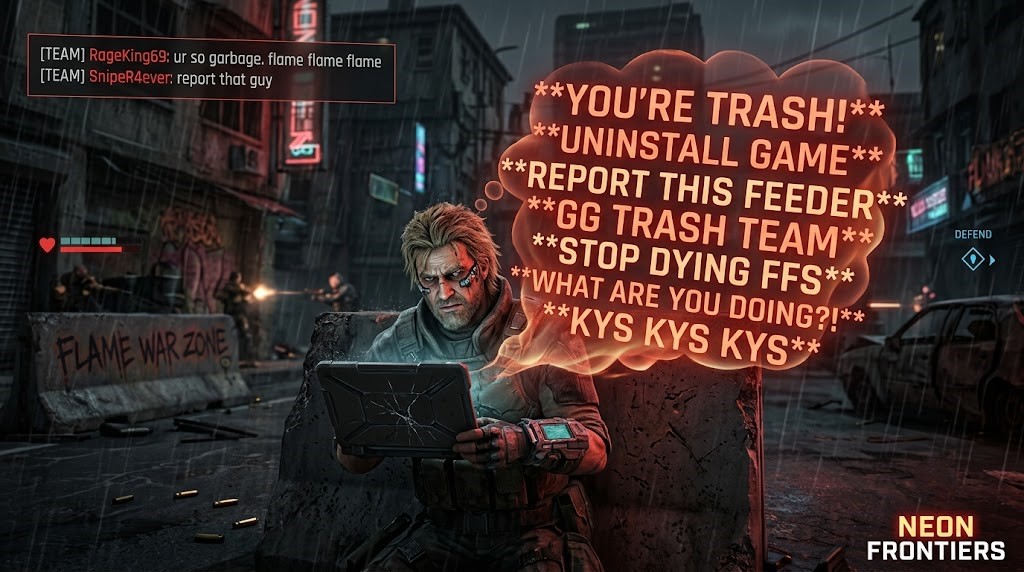
Trash talk aims at the play. Toxicity aims at the person. If you genuinely can’t tell which one you’re doing, you’re doing the second one.
FAQ
Is trash talk the same as being toxic?
No, and the difference matters. Trash talk targets performance: the whiff, the pick, the scoreline. Toxicity targets the person. The first one is competition. The second one is a report. Most lobbies full of trolling and scoreboard jokes are just trash talk with bad aim.
Is trash talk allowed in pro play?
Yes, within conduct rules. Leagues actively encourage banter because it builds rivalries and sells matches. The hard lines are slurs, hate speech, and personal attacks, and crossing them means fines or worse. “You’re going home in groups” is content. Anything about who someone is? That’s a disciplinary hearing.
How do I explain trash talk to someone who doesn’t game?
“It’s the press conference where a boxer says he’ll win in round three. Same energy, more keyboards.” Everyone’s seen that clip. Now they get your lobby too. And if someone gets salty about it afterward, well, that’s part of the ritual as well. Talk big, then choke, and you eat it. Those are the rules.