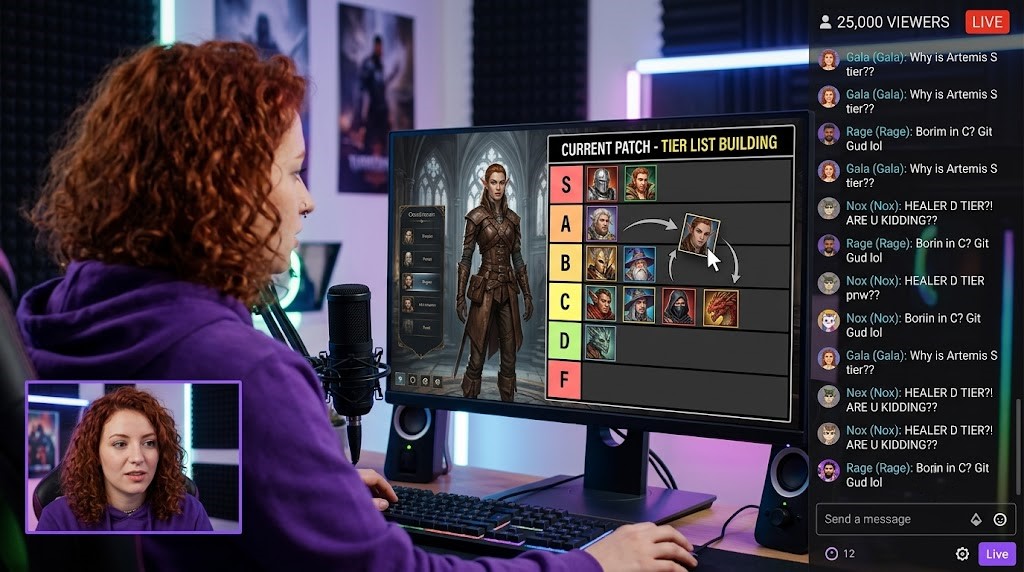
Back in 2008, nobody called them tier lists. They were just “matchup charts,” something fighting game players scribbled on forums to argue about which Street Fighter character beat which. Then Smash Bros. Melee happened. The community went absolutely nuts cataloging every character’s viability, and suddenly “S-Tier” wasn’t just a label. It was a lifestyle.
A tier list is exactly what it sounds like: a ranking. But in gaming, it’s never just a ranking. It’s the ranking. The one everyone disagrees with. The one that starts wars in comment sections. The one that makes your main character’s placement feel like a personal attack.
What Tier List Sounds Like In-Game
Open any Twitch stream during a new patch and chat will be wall-to-wall tier list debates. Here’s how it usually goes down:
viewer1: “They put Jett in B-Tier? Copium.” viewer2: “Sage in A is criminal. She’s C at best.” streamer: “Guys, it’s one guy’s opinion.” chat: “YOUR OPINION IS WRONG”
The word itself has become a verb. “They tier-listed my boy.” “Don’t tier-list me, bro.” It’s a threat and a meme at the same time.
Over in a Discord server I’m in, someone dropped a homemade tier list of potato chips last week. That’s how far it’s spread. Started with meta picks in League. Now it’s ranking snacks. The format is unstoppable.
How Tier List Became a Thing
Fighting games birthed it. Smash Bros. raised it. League of Legends turned it into an industry.
In the FGC (Fighting Game Community), tier lists were serious business. They determined tournament viability, sponsor interest, even character selection at the highest level. A low-tier hero winning a major was headline news. It still is.
But the format exploded when YouTubers realized tier lists get clicks. “Ranking Every Weapon in Call of Duty.” “The Definitive Minecraft Mob Tier List.” “I Ate Every Fast Food Burger and Ranked Them.” The template works for everything because humans love hierarchies. We love arguing about them even more.
By 2015, every major game had tier lists. By 2020, every minor game had them too. Now? Your friend group probably has a tier list of your friend group. (You’re not S-Tier. Sorry.)
How Tier List Took Over Gaming
Because it gives us something to fight about that isn’t politics.
Tier lists are harmless controversy. You can scream at someone for putting your favorite gun in B-Tier, and nobody’s actually mad. It’s performative anger. The best kind. It’s why Twitch chat spams emotes every time a streamer reveals their rankings. Half the chat agrees, half riots, everyone donates.
The format also democratized game knowledge. Before tier lists, you had to dig through forums to know what was op or broken. Now? One image, five minutes, you know the whole meta. Sure, it might be wrong. But at least you know something.
And let’s be real. Making one feels good. Dragging characters around, pretending you’re an expert. It’s power fantasy for people who can’t code. No shame in that.
Related Terms
If you’re deep into this culture, you’ve probably seen these too:
- Meta — what’s actually winning right now, not what you wish was winning
- Nerf — what happens to your S-Tier pick next patch
- OP — anything that hasn’t been nerfed yet
FAQ
So is a tier list just a fancy ranking?
A ranking is just numbers. First, second, third. A tier list groups things into categories: S, A, B, C, D, F. The gaps between tiers matter more than the order inside them. That’s why two characters in A-Tier can feel completely different in power level. The system is fuzzy by design.
Why is S-Tier above A-Tier?
Japan. The S stands for “shuu,” meaning excellent or superior. Japanese games used S-rank before A-rank, and Western games copied it. Now it’s universal. A is good. S is broken. SS is “we didn’t balance this.”
How do I explain tier lists to someone who doesn’t game?
Show them a tier list of Marvel movies. Or pizza toppings. Or their coworkers. They’ll get it immediately. Humans love sorting things into boxes. Gamers just made it an Olympic sport.