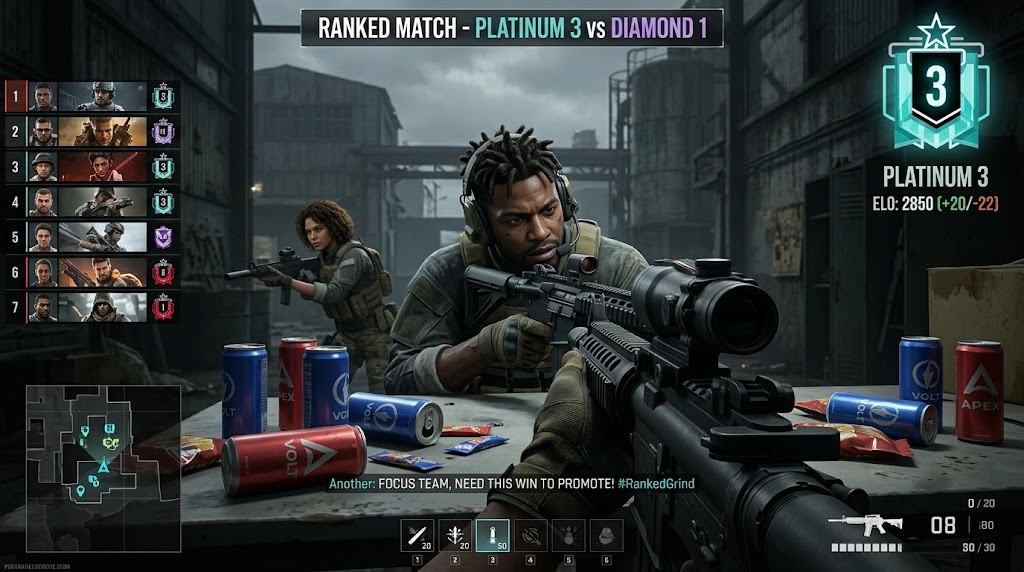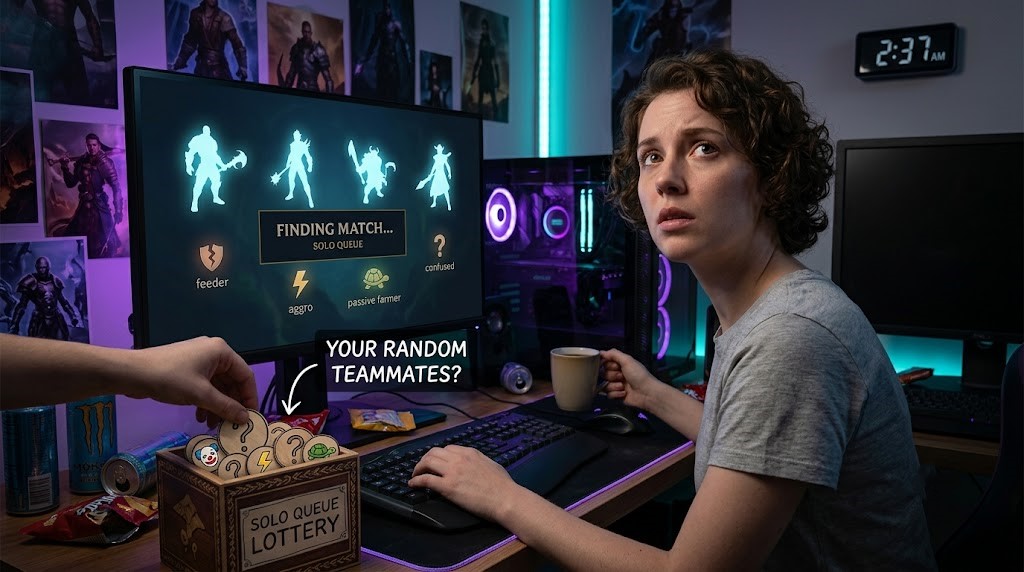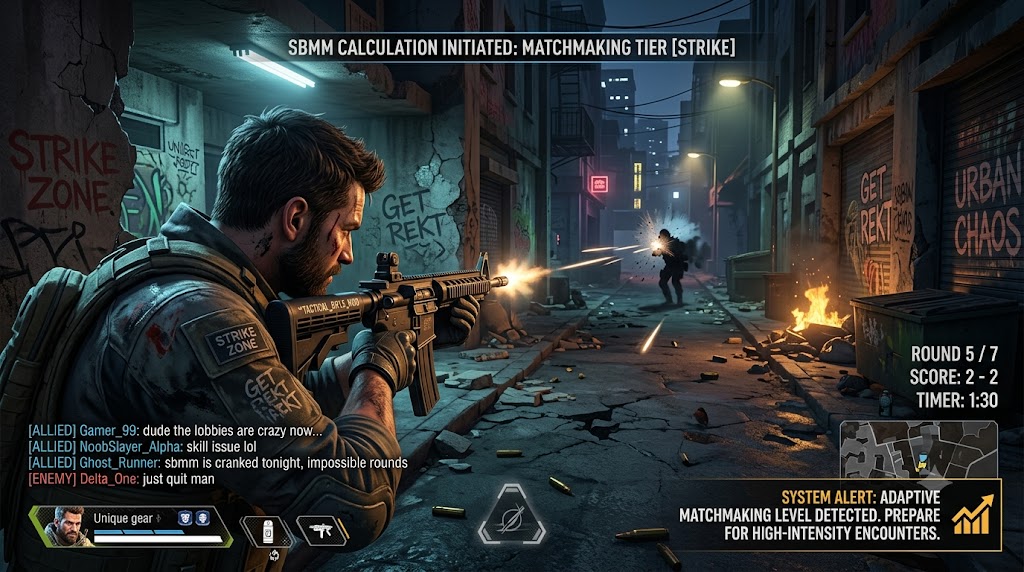
SBMM. Four letters. The most hated acronym in online shooters.
If you’re here for the SBMM meaning in gaming, it’s simple: skill-based matchmaking. The game watches how you play, hands you a hidden skill rating, and builds your lobbies out of people rated about the same as you. Play well for a few matches and your next lobby gets meaner. That’s the whole machine.
The SBMM Effect
Nobody writes love letters to a matchmaking algorithm. This one gets blamed for sweaty quick play, for every casual session feeling like a ranked final, for friends refusing to queue together because the skill gap turns the lobby into a hostage situation.
The rage got loud enough that Activision actually flinched. In October 2025 they announced Black Ops 7 would default to Open Matchmaking, where skill is “minimally considered,” and brought back persistent lobbies for the first time since 2019. Players celebrated for about a month. Then streamers spent December insisting the system was secretly “cranked” for the Christmas noobs, until Treyarch’s design director personally replied “No they haven’t” (yes, really).
My own lobbies since the change feel different, and I’d call it an improvement. Some nights you run the place, some nights you get run over. The chaos is the point. The old setup made every session feel like clocking in for a shift.
Battlefield 6, meanwhile, kept its own version: ping, region, and server fullness first, skill somewhere in the mix. Two shooters, two philosophies, one endless argument.
How SBMM Became a Thing
So where did SBMM come from? Skill ratings are old. Chess had a proper statistical one decades before online games existed, and competitive games have borrowed that homework ever since.
Early online shooters didn’t bother. Server browsers, random lobbies, whatever filled fastest. Halo 3-era matchmaking loosely sorted by rank, but mostly it just found you a game. You’d stomp one match, get stomped the next. Nobody wrote think pieces about it.
The modern SBMM origin story starts around 2019. Call of Duty: Modern Warfare rebuilt its matchmaking around strict skill sorting, leaning on hidden performance data (K/D, accuracy, win rate) to group everyone. New players got protected lobbies. Veterans got other veterans. Forever. Apex, Fortnite, Valorant, every big multiplayer game ran its own flavor of the same idea.
The pitch from developers is retention: closer matches keep casual players from quitting after a rough night. The counter from anyone with a decent KDA is that getting punished for improving feels awful, and that a determined smurf dodges the whole system anyway. Both things are true, which is why the argument never dies.
What SBMM Sounds Like In-Game
Real SBMM examples, from the trenches:
CoD quick play, 11 PM on a Tuesday:
“bro these lobbies are SWEATY” “I go 30-10 once and now I’m playing against the CDL” “sbmm is cranked tonight, I can feel it” “just reverse boost lol” “I miss random lobbies. Stomp, get stomped, whatever. It was honest.”
Same conversation. Every night. The Discord duo version is shorter: someone says “one more,” loses, mutters “the algorithm hates me,” and queues again anyway.
One honest warning before you join the choir: don’t blame every loss on the system. Sometimes the other guy was just better. It happens to me roughly twice an evening.
Here’s how the three matchmaking flavors actually differ, since people mix them up constantly:
| Hidden SBMM | Ranked | Open matchmaking | |
|---|---|---|---|
| Sorts you by | invisible skill rating | visible rank | mostly connection |
| What you see | nothing, just vibes | LP, divisions, points | nothing |
| Why it tilts you | improving gets punished | the grind is the whole point | stomps happen both ways |
| Where it lives | most casual playlists, 2019-2025 CoD | every competitive game | Black Ops 7’s default |
FAQ
What does SBMM stand for?
Skill-based matchmaking. That’s it. An algorithm that sizes you up and finds you opponents it considers your equals, whether you asked for that or not.
Is SBMM just ranked matchmaking in disguise?
Short answer: no. SBMM vs ranked comes down to visibility. Ranked shows you a ladder, a number, a badge to chase. The hidden version gives you nothing to look at, which is exactly why it makes people paranoid. You can’t prove it exists in any given lobby. You can only feel it.
Why do streamers hate SBMM so much?
Honestly? Because it ruins the content. A streamer stomping randoms makes for great clips. A streamer grinding through twelve other sweats who all play like it’s a salary negotiation does not. When they say the game “isn’t fun anymore,” this is usually what they mean.
Did Black Ops 7 actually remove SBMM?
Yes and no. Open playlists use minimal skill consideration, and that’s now the default experience. But one Standard Moshpit playlist keeps strict skill sorting, and ranked play uses it too. It became an option instead of the air you breathe.
Can you do anything about SBMM?
Not much. Off-peak queueing softens it in some games, and no, you don’t need to go full tryhard just because the lobby does. The cleanest fix is picking the playlist that matches your mood. Open when you want chaos. Standard when you want a fair fight.