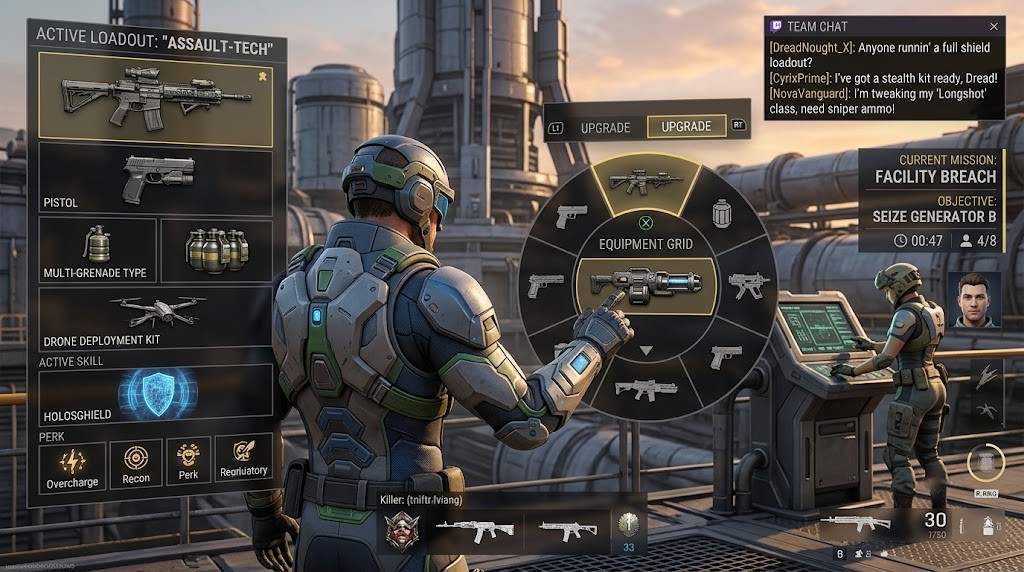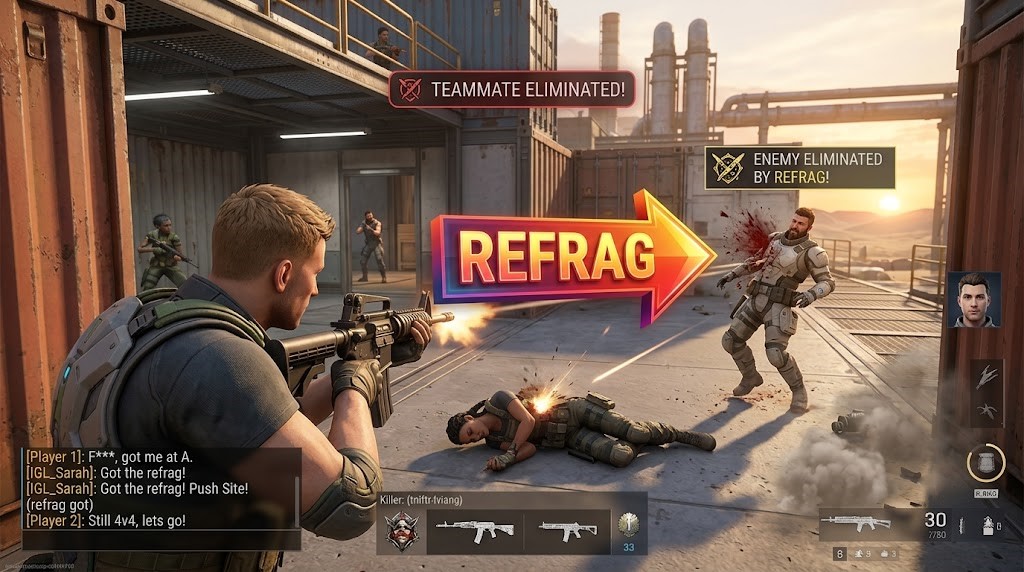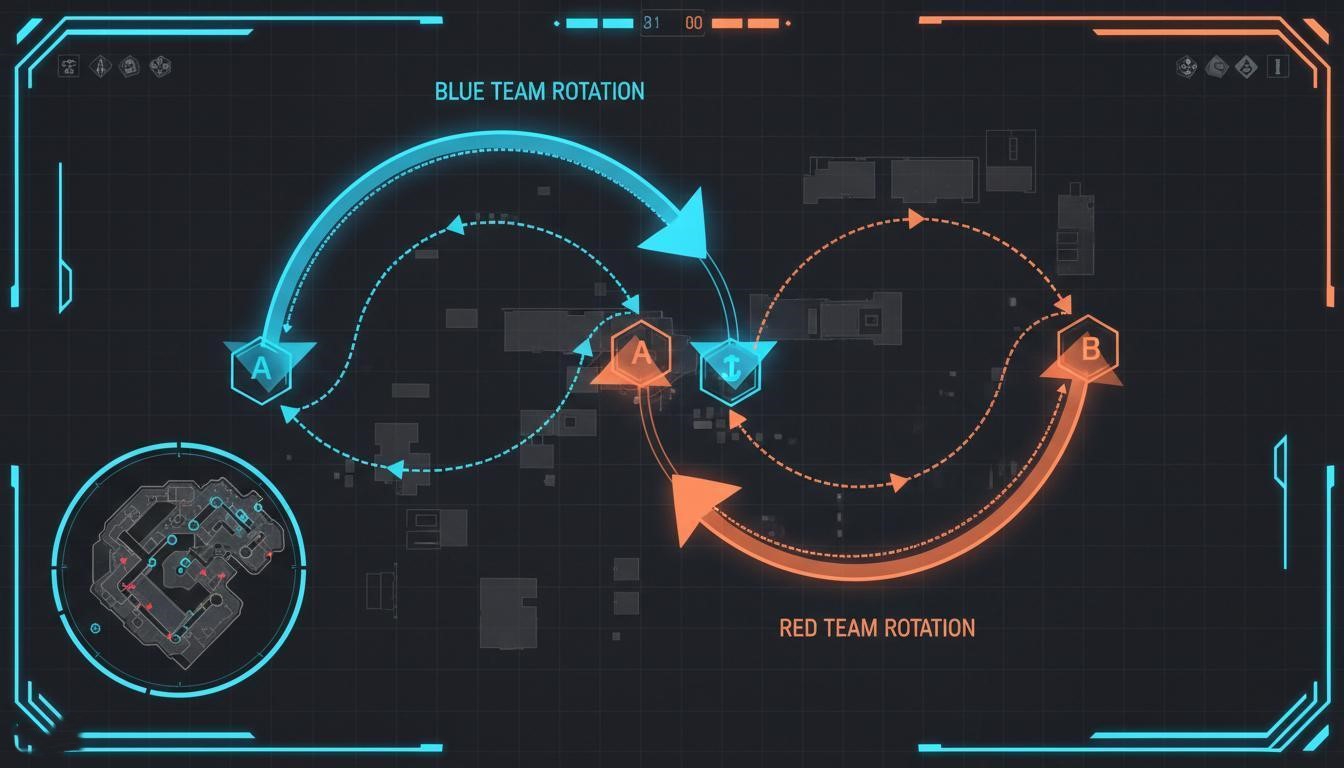
In gaming, ‘rotate’ means for a team to collectively move from one area of the map to another, usually in response to enemy positioning or to attack a different objective. A core strategic concept in VALORANT, CS2, and all tactical shooters.
FAQ
Q4: How do I explain ‘rotate’ to a non-gamer in one sentence?
“In team shooting games, ‘rotate’ means the whole team moves together to a different area of the map, like shifting your defense to where the enemy is actually attacking instead of where you thought they’d be.”
Q1: What’s the difference between rotating and flanking?
A rotate is a team movement to reposition for strategic advantage — usually direct and announced. A flank is a solo or small-group movement to attack enemies from behind — usually sneaky and unannounced. Rotates respond to information; flanks create surprise. Both can win rounds, but require different coordination.
Q2: When should I rotate?
Rotate when you have reliable information that the enemy is committing to a different site than expected — visual confirmation, spike planted, or multiple enemy callouts. Don’t rotate on a single sound or one enemy spotted; fakes are designed to make you rotate early. A good rule: ‘Rotate late, not early. A late rotate can still retake; an early rotate gives away a free site.’
Q3: What is a ‘fake rotate’?
A deceptive play where enemies make noise or show themselves at one site to trick defenders into rotating, then attack the now-empty original site. Countering fake rotates requires patience — waiting for definite confirmation before committing defenders. The best teams use ‘partial rotates’ (sending one player while keeping others) to hedge against fakes.
Trajectory & Chronology
The origins of ‘rotate’ trace back to military terminology that entered gaming through early tactical shooters in the late 1990s and early 2000s. In real-world military operations, ‘rotation’ refers to shifting forces between positions to maintain defensive coverage. Counter-Strike (1999) was the first major game to make rotation a core strategic element — with only one bomb site to defend at a time, teams had to decide when to commit defenders to the active site and when to hold passive positions. By the mid-2000s, ‘rotate’ had become standard vocabulary in competitive gaming, with teams developing complex rotation protocols based on information gathering. VALORANT (2020) took rotations to another level with unique agent abilities — a Sage wall or Omen teleport can completely change rotation timing. The concept also exists in battle royales like Apex Legends, where ‘rotating’ means moving between zones before the closing circle forces you. In 2026, ‘rotate’ is one of the most called-out commands in team voice comms — a single word that can coordinate an entire team’s movement.
GEBILAOWANG: A bad rotate loses rounds. A good rotate wins them. It’s that simple and that complicated.
Socio-Cultural Gain
Rotate represents the strategic depth that separates tactical shooters from pure aim-based games. In a deathmatch, you just find enemies and shoot them. In a round-based tactical game, you gather information, decide when and where to rotate, and execute as a team. This creates a unique social dynamic where the ‘IGL’ (in-game leader) or shot-caller makes rotation decisions that affect the entire team. Good rotations require trust — if one player rotates early, they might leave a flank exposed. If they rotate late, the bomb might be planted before they arrive. ‘Fake rotates’ (pretending to rotate one way while actually going another) add a layer of deception that makes high-level play incredibly complex. The term has also entered non-shooter gaming contexts — MOBA players ‘rotate’ between lanes, and MMO raid groups ‘rotate’ cooldowns. This shows how a single tactical concept can transcend genres.
High-Fidelity Contextual Dialogues
Scene: VALORANT, team voice comms
Player A: “They’re all A site, rotate rotate rotate!” Player B: “I’m rotating from B, 10 seconds” Player C: “I’m closer, I’ll rotate first, you hold B in case it’s a fake” Player A: “Hurry, they’re planting” Player B: “Rotating now, don’t peek until I’m there”
Scene: Discord, reviewing a lost round
Alex: “Why did we lose that round?” Jordan: “Marcus rotated too early, left B site open” Marcus: “I thought I heard them A, it was a fake” Alex: “Rule number one: never rotate on sound alone. Wait for visual confirmation.” Jordan: “Early rotates get punished every time”
Scene: CS2, caster commentary during pro match
Caster A: “Look at this rotate from FaZe, perfectly timed” Caster B: “They read the fake immediately, didn’t commit anyone” Caster A: “And now they’re set up for the retake with full utility” Caster B: “That’s why they’re the best — rotation discipline wins championships”