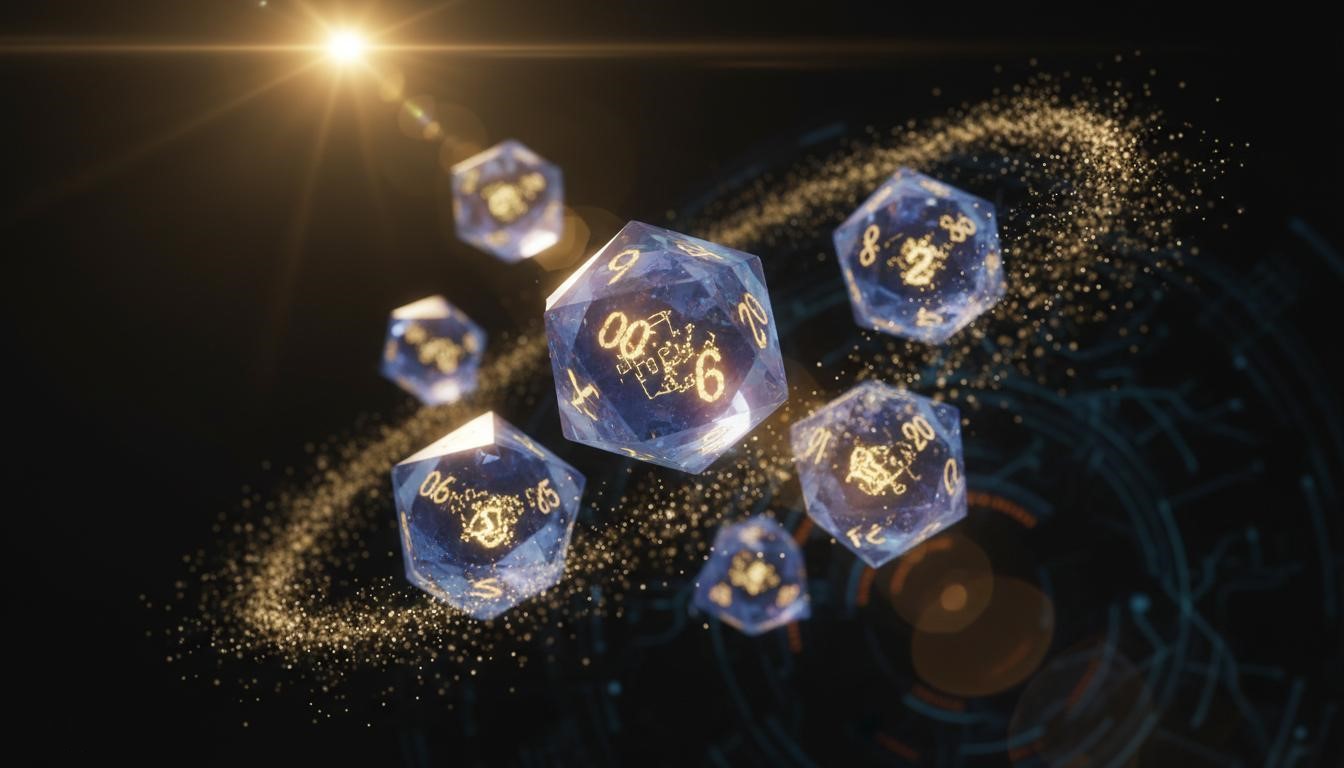
RNG stands for “Random Number Generator” and refers to the system games use to create random outcomes. From loot drops to critical hits, RNG determines luck in almost every modern game.
Trajectory & Chronology
The term “RNG” entered gaming vocabulary through tabletop RPGs in the 1970s and 1980s, where physical dice served as the original random number generators. When video games adopted similar systems in the 1990s, “RNG” became shorthand for any randomized game mechanic. By the early 2000s, MMORPGs like World of Warcraft made RNG central to the player experience — every loot drop, every critical hit, every rare spawn was determined by invisible dice rolls. The term exploded in popularity around 2015-2016 with the rise of Hearthstone and other card games where RNG became a controversial design element. “RNGesus” (RNG + Jesus) emerged as a meme around this time, personifying luck as a deity players prayed to for good rolls. In 2026, RNG is universal across all gaming genres, and complaining about “bad RNG” is one of the most common forms of gamer catharsis.
GEBILAOWANG: RNG is gaming’s way of reminding you that life isn’t fair — but at least in games, you can blame the code instead of the universe.
Socio-Cultural Gain
RNG represents the intersection of skill and luck that defines modern gaming culture. Unlike pure skill games (chess), most popular games incorporate RNG to create variety and suspense. This creates a unique social dynamic: when you win, it’s skill; when you lose, it’s “bad RNG.” This coping mechanism is so universal that “RNG” has become gaming’s default excuse. The cultural significance extends beyond games — “RNG” is now used in everyday internet slang to describe any situation involving luck. “My RNG is terrible today” means nothing is going right. The term also highlights the gambling-adjacent nature of many game mechanics. Loot boxes, gacha systems, and randomized rewards all rely on RNG, leading to regulatory scrutiny in some countries. Players have developed entire strategies around “RNG manipulation” — farming specific enemies, waiting for “lucky” servers, or performing rituals before opening loot boxes.
High-Fidelity Contextual Dialogues
Scene: Destiny 2, raid voice comms
Player A: “Please RNGesus, give me the exotic I’ve been farming for three months” [Raid boss dies, exotic drops] Player A: “LET’S GO! RNGESUS BLESSED ME!” Teammate: “I’ve done this raid 50 times and still don’t have it. Your RNG is unreal.” Player B: “RNG giveth and RNG taketh away. Enjoy it while it lasts.”
Scene: Discord, complaining about bad luck
Alex: “I opened 100 loot boxes and got nothing good” Jordan: “Your RNG is cursed, my dude” Alex: “I think the game hates me specifically” Jordan: “Have you tried sacrificing a controller to RNGesus?” Alex: “I’m about to sacrifice my whole setup at this point”
Scene: Twitch chat, streamer gets unlucky
[Streamer misses a 99% hit chance attack] Chat: “RNG MOMENT” Chat: “that’s peak rng right there” Chat: “99% and he missed, the game said no” Chat: “rng giveth and rng taketh away” Streamer: “I did everything right and RNG said ’nah.’ This is why we can’t have nice things.”
FAQ
Q1: Is RNG the same as luck?
RNG is the system that creates randomness; luck is the result you experience. Think of RNG as the dice and luck as what you roll. Two players face the same RNG system, but one gets lucky (good rolls) and one doesn’t (bad rolls). The system is fair in design — the outcomes just feel unfair when they don’t go your way.
Q2: How do I deal with bad RNG?
Accept that RNG is part of the game and focus on what you can control. In games with heavy RNG (like Hearthstone or gacha games), set limits on spending and time. Remember: everyone experiences bad RNG streaks. The key is not letting temporary bad luck tilt you into making worse decisions. Some players track their RNG over time to prove to themselves that it averages out.
Q3: Is RNG still a major factor in 2026 games?
Very much so. Almost every popular game in 2026 uses RNG in some form — from Fortnite’s weapon spawns to VALORANT’s spray patterns to RPG loot systems. Some competitive games have moved toward reducing RNG (CS2’s fixed recoil patterns), while others embrace it (Battle Royale item spawns). RNG is a game design tool, not a bug — when used well, it creates exciting moments. When used poorly, it creates frustration.
Q4: How do I explain RNG to a non-gamer in one sentence?
“RNG stands for ‘Random Number Generator’ — it’s the invisible dice roll that games use to decide random outcomes like loot drops, critical hits, and whether you get the rare item you’ve been hunting for weeks.”