AD
Respawn

Respawn

slang
Updated Jul 4, 2026 5 min read
general mechanics fps rpg essential
AD

What Does "Respawn" Mean?

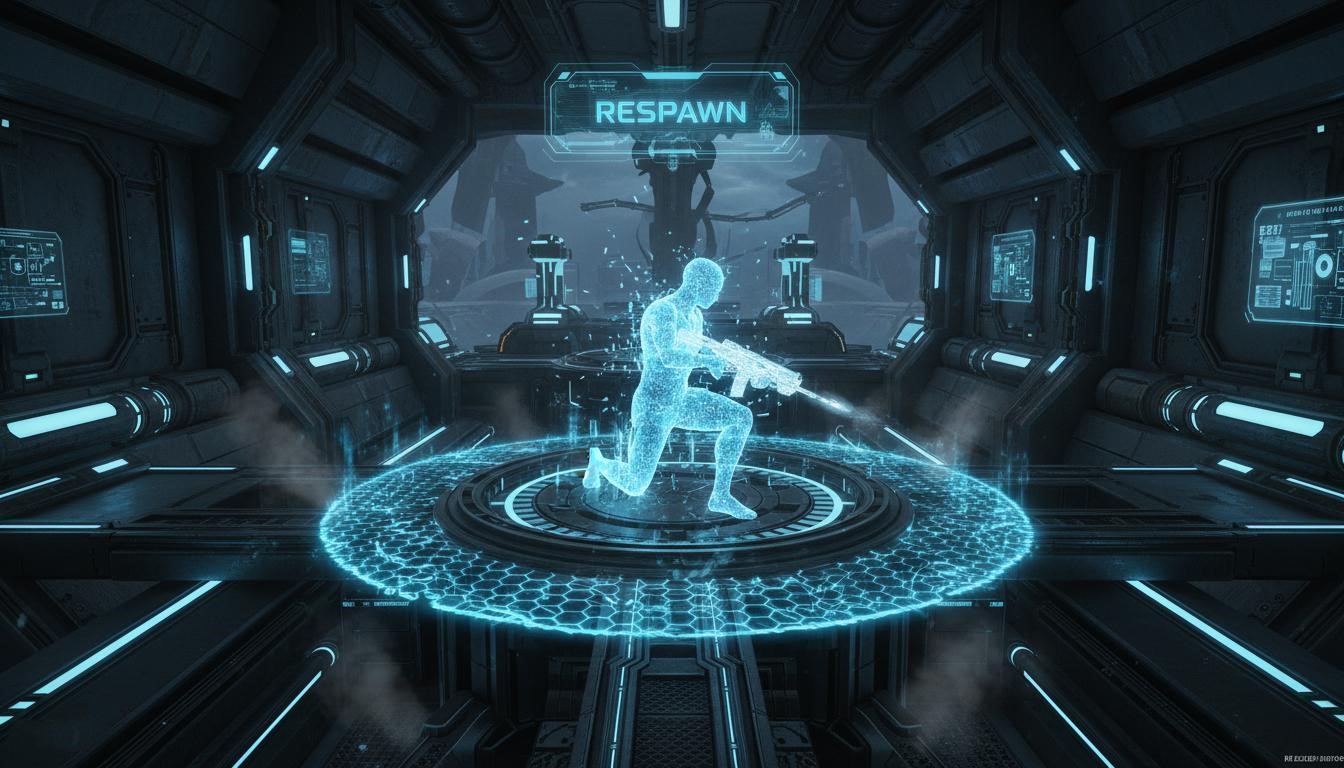
In gaming, ‘respawn’ means to reappear in the game after dying, typically at a designated spawn point or checkpoint. It is one of the most fundamental mechanics in modern gaming, replacing the older ‘Game Over’ system and allowing players to continue without restarting.


Trajectory & Chronology

The term ‘respawn’ entered gaming in the early 1990s through first-person shooters like Doom (1993) and Quake (1996), where players would ‘spawn’ (appear) at the start of a match and ‘respawn’ after dying. Before respawn systems, games used ’lives’ — you had 3 chances and then it was Game Over. The shift from lives to respawns was one of the most important design evolutions in gaming history. By the 2000s, respawn systems were standard in virtually all multiplayer games. Different genres developed different respawn mechanics: FPS games use timed respawns, battle royales use respawn beacons, MOBAs have death timers, and MMOs have graveyard runs. PlayStation’s 2026 Gaming Glossary defines respawn as ‘when a player reappears in the game after dying.’

GEBILAOWANG: I’ve seen this term used ironically so often that the original meaning is almost lost.

Socio-Cultural Gain

Respawn represents one of gaming’s most important psychological innovations: the removal of permanent failure. In traditional games, dying meant starting over. In modern games, dying is a temporary setback. This fundamentally changes how players approach challenges. The respawn system also created new social dynamics in multiplayer games. ‘Spawn camping’ (killing players as they respawn) became a controversial tactic. ‘Spawn trapping’ (controlling the area around spawn points) became an advanced strategy. Interestingly, some modern games have experimented with ‘permadeath’ modes (no respawns) as a hardcore alternative. Games like Escape from Tarkov use permadeath to create high-stakes tension.

High-Fidelity Contextual Dialogues

Scene: Call of Duty, waiting to respawn

Player A: “I died, 5 seconds until respawn.” Player B: “Spawn on me, I’m behind their lines.” Player A: “Spawning on you now.”


Scene: Apex Legends, respawn beacon

Player A: “i have your banner, heading to the beacon” Player B: “thanks, those guys third-partied us so hard” Player A: “respawning now, play safe until i get back”


Scene: Minecraft, hardcore mode discussion

Player A: “you play hardcore? no respawns, one life only” Player B: “yeah it makes every decision actually matter” Player A: “i respect that but i’d rage quit so fast if i died to a creeper”

AD

Usage Examples

ExampleContextTone
"Player A: "I died, 5 seconds until respawn.""Call of Duty, waiting to respawncasual
"Player A: "i have your banner, heading to the beacon""Apex Legends, respawn beaconcasual
"Player A: "you play hardcore? no respawns, one life only""Minecraft, hardcore mode discussioncasual

Origin & Spread

AttributeDetail
OriginsThe term 'respawn' entered gaming in the early 1990s through first-person shooters like Doom (1993) and Quake (1996), where players would 'spawn' (appear) at the start of a match and 'respawn' after dying. Before respawn systems, games used 'lives' — you had 3 chances and then it was Game Over. The shift from lives to respawns was one of the most important design evolutions in gaming history. By the 2000s, respawn systems were standard in virtually all multiplayer games. Different genres developed different respawn mechanics: FPS games use timed respawns, battle royales use respawn beacons, MOBAs have death timers, and MMOs have graveyard runs. PlayStation's 2026 Gaming Glossary defines respawn as 'when a player reappears in the game after dying.'

Cultural Context

Respawn represents one of gaming's most important psychological innovations: the removal of permanent failure. In traditional games, dying meant starting over. In modern games, dying is a temporary setback. This fundamentally changes how players approach challenges. The respawn system also created new social dynamics in multiplayer games. 'Spawn camping' (killing players as they respawn) became a controversial tactic. 'Spawn trapping' (controlling the area around spawn points) became an advanced strategy. Interestingly, some modern games have experimented with 'permadeath' modes (no respawns) as a hardcore alternative. Games like Escape from Tarkov use permadeath to create high-stakes tension.

FAQ

Q: What's the difference between respawn and revive?

'Respawn' means coming back to life after dying, usually at a spawn point. 'Revive' means being brought back to life by a teammate without dying first.

Q: Do all games have respawns?

Most modern multiplayer games do, but some hardcore games use 'permadeath' where dying means losing your character or progress permanently.

Q: What is spawn camping?

Spawn camping is when a player waits near enemy spawn points to kill them immediately as they respawn. It's widely considered poor sportsmanship.

Q: How do I explain respawn to a non-gamer in one sentence?

"It's when your character comes back to life after dying in a game — like a do-over button that lets you keep playing instead of starting over."

Sources

About the Author: This guide was compiled and written by GEBILAOWANG, an independent gaming culture researcher and lexicographer specializing in gaming slang, esports terminology, and online communication patterns. Contact: [email protected]

AD
AD