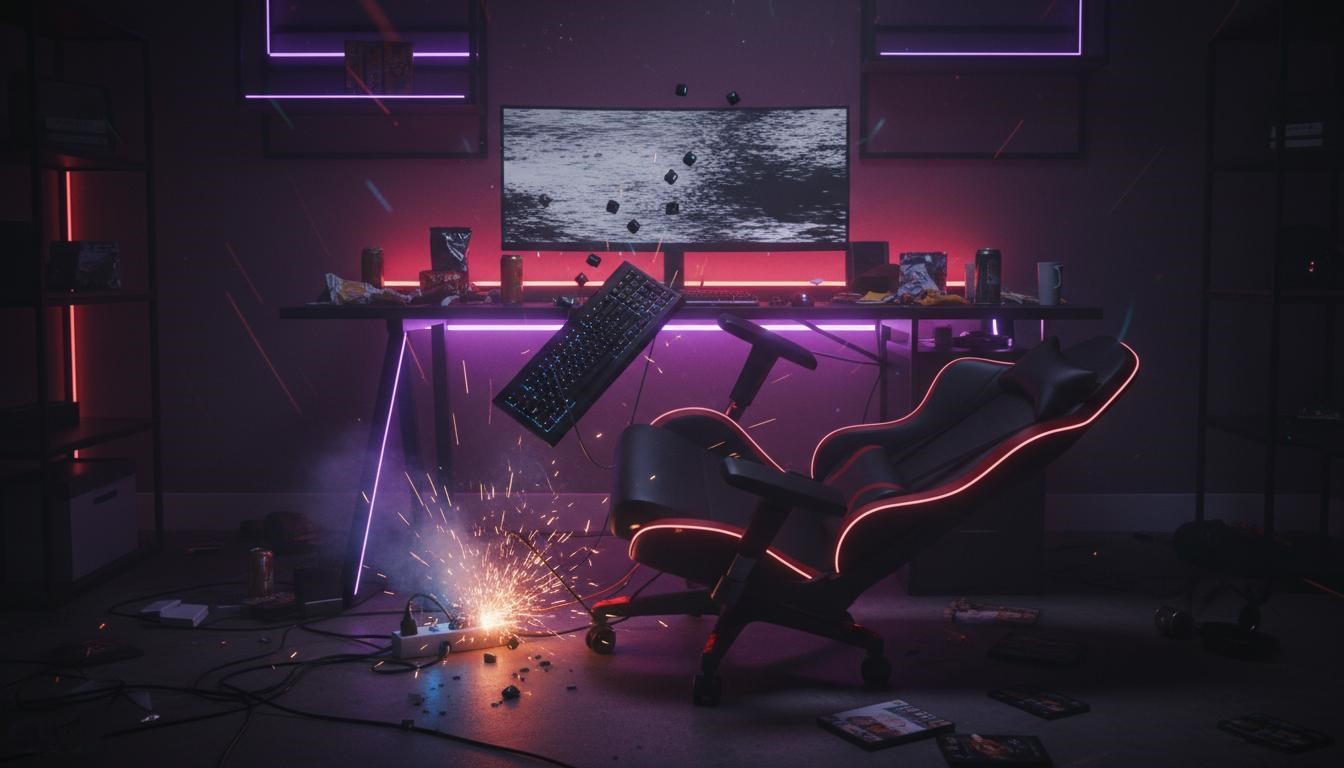
In gaming, “rage quit” means to abruptly leave a match because of anger or frustration — usually after losing, experiencing lag, or dealing with difficult opponents. It’s one of gaming’s most dramatic and meme-worthy moments.
High-Fidelity Contextual Dialogues
Scene: Rocket League, 0-5 down
Player A: “I’m done, this is ridiculous” Teammate: “Don’t leave, we can still come back” Player A: “They’ve scored off every kickoff, this is broken” [Player A disconnects] Teammate: “And there goes the rage quit”
Scene: Discord, after a session
Alex: “I rage quit so hard today” Jordan: “What happened?” Alex: “Lost 10 games in a row, last one I got team-killed twice” Jordan: “Sometimes rage quitting is self-care” Alex: “I threw my headset. Not my proudest moment.” Jordan: “At least you didn’t break it… did you?” Alex: “…It’s fine. It still works if I hold the wire.”
Scene: Among Us, getting voted out as crewmate
Player A: “I SWEAR I’m not the impostor, I was doing tasks!” [Gets voted out anyway] Player A: “This lobby is braindead, I’m out” [Player A leaves] Ghost chat: “Rage quit speedrun any%” Ghost chat: “he was crewmate too LMAO” Ghost chat: “the salt is real”
Trajectory & Chronology
The concept of rage quitting predates the term itself — players have been angrily abandoning games since the first competitive arcade cabinets in the 1980s. The specific phrase “rage quit” emerged in the early 2000s through fighting game forums and Halo LAN party culture. The advent of online matchmaking in the mid-2000s made rage quitting visible to everyone — in Halo 2, leaving a match early became a common phenomenon. YouTube compilations of “rage quits” went viral in the late 2000s, turning angry gamers into entertainment. The “Rage Quit” series by Achievement Hunter (Rooster Teeth) from 2011-2015 made the term mainstream. By the 2010s, game developers began implementing penalties for leaving matches early (temporary bans, rank deductions). In 2026, rage quitting remains common in casual play but is heavily penalized in ranked modes across most competitive games.
GEBILAOWANG: Rage quitting is the gaming equivalent of flipping the Monopoly board. It’s immature, it ruins the game for everyone else, and yet… we’ve all felt that magnetic pull toward the Alt+F4 keys. The difference between a good player and a great player isn’t never feeling rage — it’s never acting on it.
Socio-Cultural Gain
Rage quitting represents the intersection of gaming’s competitive intensity and modern instant-gratification culture. When games don’t go our way, leaving provides immediate emotional relief — but at the cost of teammates’ experience and personal growth. The social stigma around rage quitting has increased as games implement harsher penalties, but the behavior persists because the emotional payoff is immediate. “Rage quit” has transcended gaming to describe any abrupt exit from a frustrating situation — storming out of a meeting, hanging up a call, or abandoning a difficult task. The memeification of rage quitting (funny compilations, reaction videos) has both normalized and mocked the behavior. In 2026, most competitive games track “leave rate” as a player metric, and high leave rates can result in matchmaking restrictions or bans.
FAQ
Q1: Why do people rage quit instead of finishing the match?
Several psychological factors: immediate emotional relief (quitting feels better than continuing to suffer), loss aversion (humans feel losses more intensely than equivalent gains), the “sunk cost fallacy” in reverse (refusing to invest more time in a losing effort), and lack of emotional regulation skills. Some players also rage quit to deny opponents the satisfaction of a full victory. It’s rarely a rational decision — it’s an emotional impulse that feels good in the moment but has negative consequences.
Q2: What are the penalties for rage quitting?
Varies by game: temporary matchmaking bans (15 min to several hours), rank point deductions, leaver queue (matched only with other leavers), reputation score decreases, and in extreme cases, permanent account suspensions. Most games distinguish between occasional disconnections (power outage, crash) and habitual leaving through statistical tracking. Some games offer “safe to leave” options when a teammate disconnects early.
Q3: How do I stop rage quitting?
Recognize your triggers — what specifically makes you want to leave? Take breaks between games to reset emotionally. Remind yourself that one bad match doesn’t define your skill. Focus on personal improvement rather than winning. Mute toxic players immediately. Some players use “loss limits” — deciding in advance to stop playing after 2-3 consecutive losses. The most effective technique is simple: sit with the discomfort for 30 seconds before deciding to leave. Most rage quit impulses pass within half a minute.
Q4: How do I explain rage quit to a non-gamer in one sentence?
“A ‘rage quit’ is when someone gets so angry or frustrated during a game that they abruptly leave the match before it’s over — like storming out of the room because you’re losing at Monopoly.”