High-Fidelity Contextual Dialogues
Scene: Gaming convention, mod showcase booth
Attendee: “This looks completely different from the base game.” Modder: “It’s a total conversion mod. New story, new mechanics, 200 hours of content.” Attendee: “And it’s free?” Modder: “Always. We do this for the community.” Attendee: “That’s incredible. How many people worked on it?” Modder: “Team of 40, three years. Some of us got hired by the actual studio because of it.”
Scene: All-chat, discussing game improvements
Player A: “This UI is terrible” Player B: “there’s a mod for that” Player C: “literally a mod for everything” Player A: “Can I get banned for using mods?” Player B: “cosmetic only, you’re fine.” Player C: “just dont use mods in multiplayer”
Scene: Friends chatting about PC gaming
Alex: “Why do you play on PC instead of console?” Jordan: “Mods. Simple as that.” Alex: “Like what?” Jordan: “My Skyrim has 400 mods. Different game entirely. Better graphics, new quests, bug fixes the devs never made.” Alex: “Isn’t that complicated to set up?” Jordan: “Used to be. Now there are mod managers that handle everything. Worth every minute.”
Socio-Cultural Gain
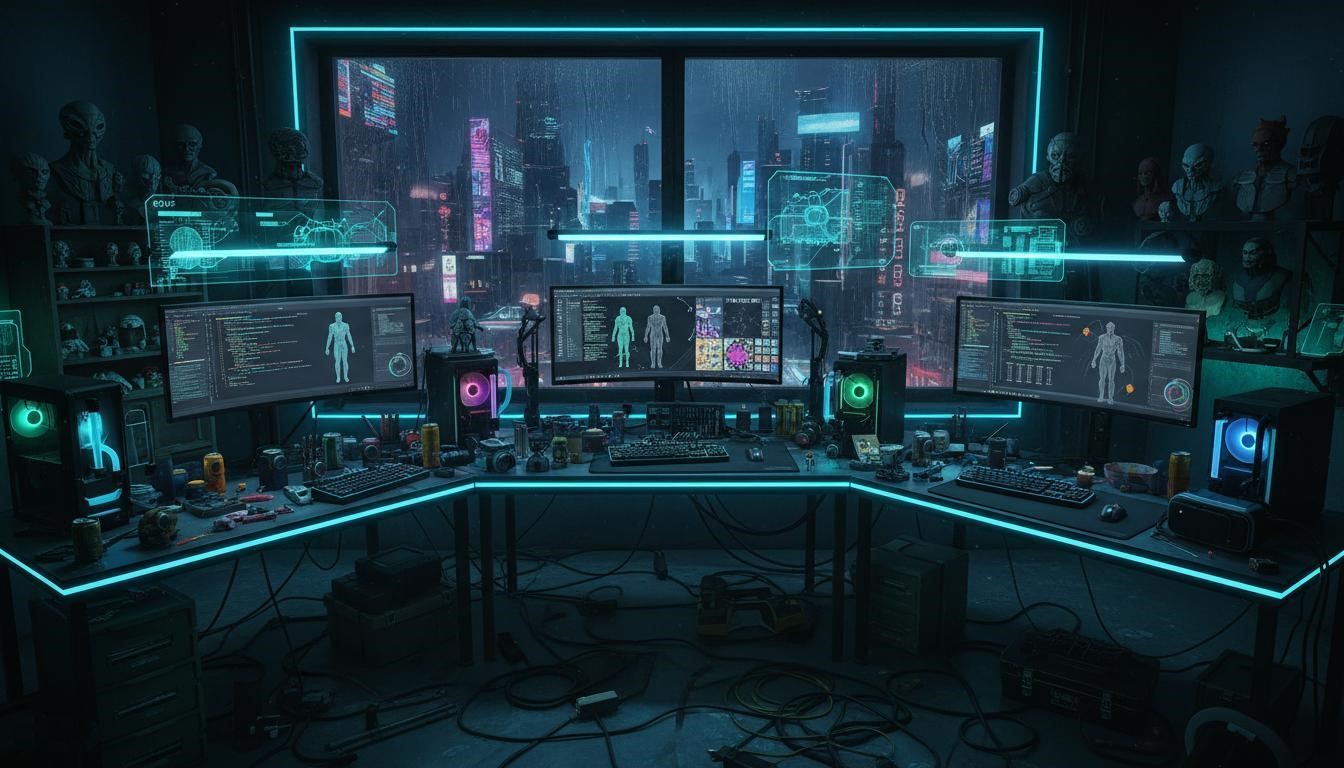
‘M Odd’ represents one of gaming’s most unique cultural phenomena — players not just consuming content but creating it, often for free. The modding community has produced works that rival professional development: total conversions that are essentially new games, graphical overhauls that modernize decade-old titles, and quality-of-life fixes that developers should have made themselves. Some of the biggest games in history started as mods — Counter-Strike began as a Half-Life mod, Dota as a Warcraft III mod, and PUBG’s battle royale concept traces back to Arma mods. Mod culture embodies the collaborative spirit of gaming: experienced programmers, artists, and writers coming together to improve something they love. Platforms like Nexus Mods and Steam Workshop have turned modding into an ecosystem, with billions of downloads and dedicated communities. For many PC gamers, mod support is a deciding factor in purchases.
GEBILAOWANG: Mods are why PC gaming will always be superior. You buy a game once and the community gives you infinite content for free. Console players will never know the joy of downloading a ‘Thomas the Tank Engine’ dragon mod for Skyrim.
Trajectory & Chronology
By the early 1990s, ‘mod’ had become standard in PC gaming communities, crossing into mainstream awareness as modding tools became more accessible. The practice began in the 1980s with user-created levels for games like Doom and Wolfenstein 3D, which included built-in level editors that invited players to create their own content. Id Software’s decision to release Doom’s source code in 1997 was revolutionary — it spawned an entire generation of modders who learned game development by modifying existing titles. The 2000s saw the rise of total conversion mods that replaced nearly all original content. Steam Workshop (2012) democratized mod distribution by making installation a one-click process. In 2024-2025, the debate over paid mods and AI-assisted modding emerged, but the core culture remains: players modifying games to make them better, weirder, or more personal.
FAQ
When do you use ‘mod’?
Use ‘mod’ to refer to any player-created modification of a game. This includes texture packs, new characters, gameplay tweaks, total conversions, UI improvements, bug fixes, and custom levels. ‘Mod’ can also refer to the person who creates these modifications (short for ‘modder’) or the act of modifying (“I’m going to mod this game”).
How do you explain ‘mod’ to a non-gamer?
“A mod is like a custom upgrade kit for a car — players create their own additions and improvements to a game they already own. It can be anything from a new paint job to a completely rebuilt engine. The best part is modders usually share their work for free, so the game keeps getting better long after the original developers stopped working on it.”
Is ‘mod’ the same as a ‘hack’?
No, they’re different. A mod is a legitimate modification that alters game content — new visuals, gameplay changes, added features. Mods are typically supported or at least tolerated by game developers. A hack (in the cheating sense) is used to gain unfair advantages in multiplayer, like aimbots or wallhacks. Hacks are designed to exploit and ruin the experience for others, while mods enhance the experience.
Is ‘mod’ still used in 2026?
More than ever. Modding communities continue to thrive, with games like Minecraft, Skyrim, Stardew Valley, and Baldur’s Gate 3 having hundreds of thousands of active mods. Steam Workshop has made modding accessible to casual players, and some modern games build their entire identity around user-generated content. The line between ‘game’ and ‘platform for mods’ is increasingly blurred.