For a word that gets typed thousands of times a day, MOBA has a surprisingly boring origin. It’s not gamer slang somebody coined in a forum. It’s a marketing term. But I’m getting ahead of myself. As a support main, I’m contractually obligated to set up the play before anyone gets credit.
How MOBA Took Over Gaming
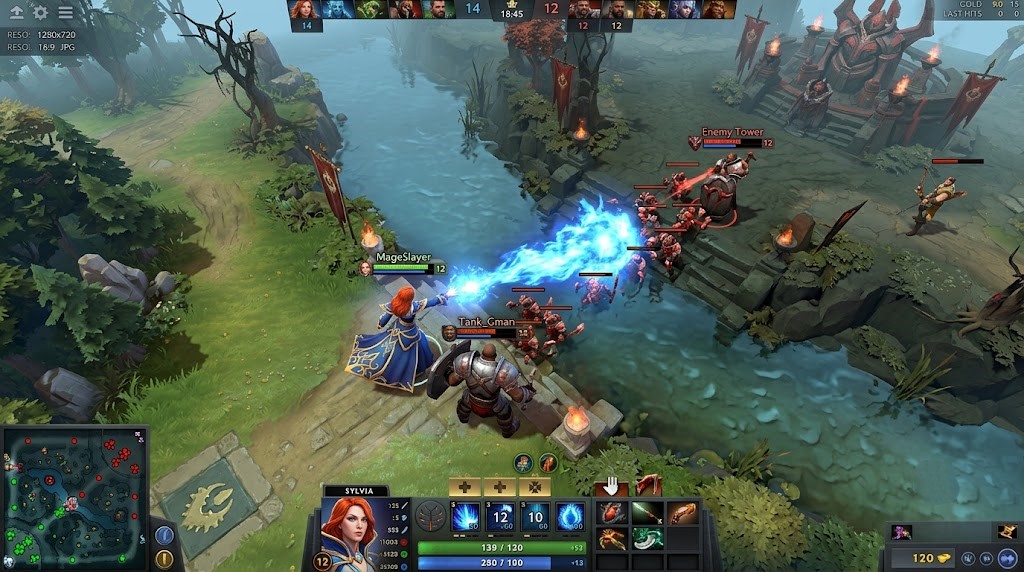
Two teams, usually 5v5, on a map split into lanes. Everyone controls one hero with unique abilities. Minions march, towers guard, and you win by smashing the enemy’s main structure: the Nexus or the Ancient, depending on the game. That’s the whole skeleton.
And it ate the industry. League of Legends and Dota 2 became two of the biggest games on Earth, with Smite and Heroes of the Storm trailing behind. Entire esports leagues, stadium finals, the works.
The love-hate thing is real. Ask any player and you’ll hear the same quote: “I love playing ’em with my friends, but I hate playing ’em with strangers.” Teamwork feels amazing. Your random mid laner going 0/7 while begging for a peel? Less amazing.
| MOBA | RTS | ARTS | Hero shooter | |
|---|---|---|---|---|
| You control | one hero | whole army | one hero | one hero |
| Base building | no | yes | no | no |
| Minions/farming | yes | yes (you make them) | yes | no |
| Term status | industry standard | the parent genre | retired nickname | shooter cousin |
Before MOBA Was Everywhere
So where did the term come from? Custom maps. In the late 1990s, a StarCraft mod called Aeon of Strife laid the groundwork: heroes, lanes, one base to kill. One fan-made map, inside a game about something else entirely. Then Warcraft III’s map editor produced Defense of the Ancients, better known as DotA, and the formula exploded.
For years nobody agreed on what to call it. “DotA-style game” did a lot of heavy lifting. So did “action real-time strategy” (ARTS), which at least tried. Fans argued about the label on forums while the genre quietly became the biggest thing in PC gaming. Then in 2009, Riot Games started pushing “Multiplayer Online Battle Arena” to market League of Legends, mostly to dodge calling their game a DotA clone. A little corporate? Sure. But the term stuck, and honestly it’s more useful than arguing about whose mod copied whom.
How Gamers Actually Use MOBA
In everyday speech, it’s just shorthand for the genre, mostly meaning League and Dota. Some real-world examples:
Champion select, last pick:
“we need a tank, stop hovering assassins” “this is why I hate solo queue MOBAs”
Group chat, Friday night:
“anyone up for a few games?” “only if we 5-stack. I’m not doing MOBA roulette with randoms again” “coward”
Post-game lobby, after a loss:
“gg, their jungler perma-ganked my lane” “maybe ward next time”
Notice the pattern: half the usage is people swearing off the genre, then queueing again twenty minutes later. I’ve done it. You’ve done it.
Common Questions
What does MOBA mean for a new player?
Multiplayer Online Battle Arena. It means a match-based game where two teams fight along lanes, each player pilots one hero, and the goal is killing the enemy base. If someone says “I play these games,” they almost always mean League or Dota 2.
Can a game be both a MOBA and an MMO?
Nope, easy mix-up though. An MMO is a persistent online world you live in for months. A match here starts from zero, lasts 20 to 50 minutes, and resets completely. One’s a hobby, the other’s a hostage situation with a surrender vote.
Is the term still relevant?
Yes, constantly. Players say it, devs put it in store descriptions, casters lean on it during drafts. Some purists still grumble and say “DotA-like,” but that fight was lost around 2012.
Why not just say ‘League-style game’ instead of MOBA?
Because the genre shares one skill set. If you can carry in one of them, you already understand farming, rotations, and teamfights in the rest. Saying “I’m into these games” tells people your whole profile, including the part where you flame the meta every patch.