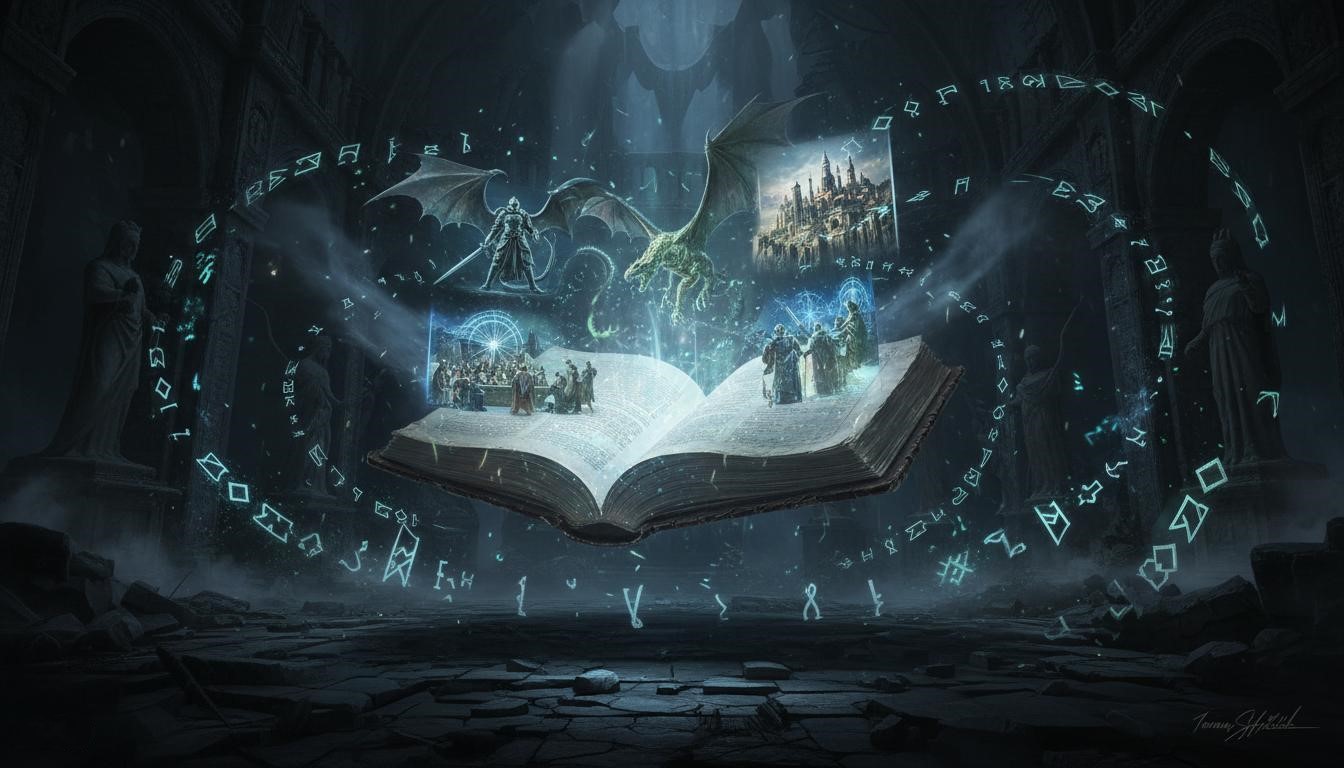
In gaming, ’lore’ refers to the backstory, world-building, and narrative history of a game universe. It encompasses character backgrounds, historical events, faction politics, mythology, and all the narrative elements that give a game world depth and meaning.
Trajectory & Chronology
The term ’lore’ comes from Old English ’lar’ meaning ’learning’ or ’teaching.’ In gaming, it was adopted from fantasy literature and tabletop RPGs. Early PC RPGs like Ultima (1980) and Wizardry (1981) had rich lore, but it was often hidden in manuals. The modern concept of in-game lore emerged with Dark Souls (2011), which told its story entirely through item descriptions and environmental details. This ‘show, don’t tell’ approach to lore became hugely influential. By 2026, lore has become a major selling point for games. Players spend hundreds of hours exploring lore through wikis, YouTube videos, and community discussions.
GEBILAOWANG: The way FromSoftware handles lore has fundamentally changed game storytelling.
Socio-Cultural Gain
Lore has become a central pillar of modern game design and player engagement. Games with rich lore (Dark Souls, The Witcher, Elden Ring) develop dedicated communities that spend years analyzing and discussing the story. Lore also drives content creation. YouTube channels like VaatiVidya have millions of subscribers creating lore analysis videos. This ’lore economy’ has become a significant part of gaming culture. The way lore is delivered has also evolved. Environmental storytelling (telling story through the world itself) has become the gold standard, with games like Bloodborne and Hollow Knight mastering the art.
High-Fidelity Contextual Dialogues
Scene: Lore discussion
Player A: “The lore in this game is incredible. Did you read the item descriptions?” Player B: “I watched a 3-hour lore video instead, way more entertaining.”
Scene: Story vs. gameplay
Player A: “I don’t care about lore, I just want good gameplay.” Player B: “But the lore enhances the gameplay! Knowing why you’re fighting makes it meaningful.”
Scene: Wiki deep dive
Player A: “I’ve spent 20 hours on the lore wiki and I still don’t understand the timeline.” Player B: “That’s the beauty of it — it’s meant to be pieced together.”
FAQ
Q1: Is lore the same as the main story?
Not exactly. The main story is what you experience directly. Lore is the broader world-building that supports it.
Q2: Why do some games hide their lore?
Environmental storytelling creates a sense of discovery. Finding hidden lore feels rewarding.
Q3: Which games have the best lore?
Dark Souls, The Witcher, Elder Scrolls, Warcraft, and Destiny are frequently cited.
Q4: How do I explain lore to a non-gamer in one sentence?
“It’s the backstory and world-building of a game — the history, mythology, and character backgrounds that make the game world feel real and deep.”