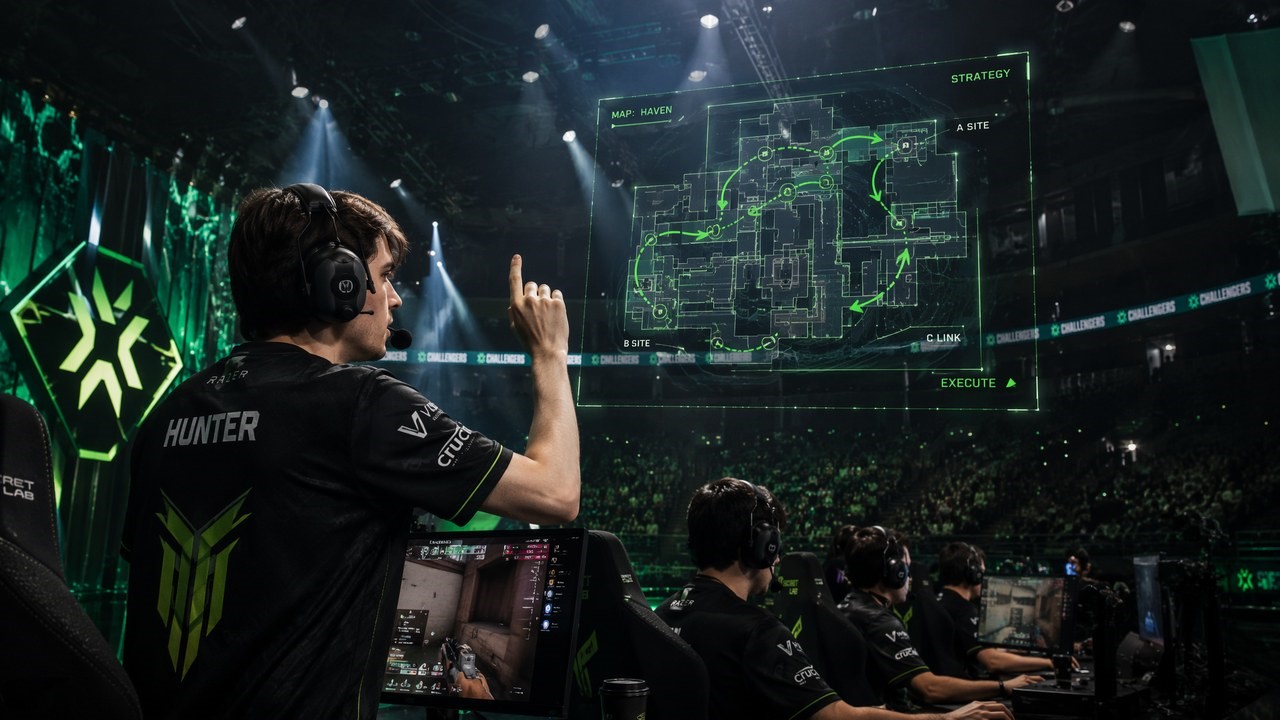
Match point, 12-11, and your team has forty seconds to decide whether to hit A or B. Four people are talking at once. One voice cuts through: “Quiet. Default for twenty, then explode B on my contact.” Everyone shuts up and moves.
That voice belongs to the IGL: the in-game leader. The player who calls the strategy, makes the mid-round decisions, and somehow stays calm while four teammates argue about a smoke.
Nobody gets blamed faster than the IGL when a plan fails. Nobody gets less credit when it works. And yet every serious team on the planet refuses to play without one.
More Than Just a Callout
Being an IGL isn’t about having the loudest mic. It’s a genuinely weird skill set: you need the tactical brain to read a map three rounds ahead, the people skills to keep four egos pointed the same direction, and the nerve to make a call knowing that if it goes wrong, it’s your fault specifically.
That’s why good IGLs age differently than aimers. Mechanical skill peaks early; game sense compounds. Teams will happily keep a 28-year-old IGL whose aim has gone soft, because the alternative (five cracked players freelancing) loses to disciplined teams every single time. Ask anyone who’s watched a superteam implode. The talent was there. The calling wasn’t.
There’s also a reason ranked players throw “who’s IGLing?” into voice chat half-jokingly. Five strangers with no plan isn’t a team, it’s a queue. Someone has to decide something.
How IGL Became a Thing
Teams have always had a shot-caller, going back to the earliest days of competitive Counter-Strike in the 1.6 era. Somebody had to say “we’re rushing B” before anyone rushed B. But for years it was just “the strat caller” or “the captain,” and the role stayed fuzzy.
The term IGL got standardized during the CS:GO era, when pro rosters became genuinely professional and roles got formalized the way they are in traditional sports. Analysts needed shorthand for the job, broadcasts needed a label to put on screen, and “in-game leader” stuck, partly to separate it from the coach, who leads from outside the server.
Astralis turned the IGL into a celebrity position. Their run from 2018 onward, with gla1ve calling some of the most disciplined Counter-Strike ever played, made casual fans realize the guy with mediocre stats might be the most important player on the server. Valorant inherited the vocabulary wholesale. FNS became a household name in that scene almost entirely on calling reputation.
By 2026 the term has leaked back down into ranked play, where it ranges from sincere to deeply sarcastic.
How You’ll Hear It Used
Post-match lobby, replay review:
“We lost that because nobody called the rotate.” “Don’t look at me, I’m not the IGL.” “Nobody is. That’s literally the problem.”
Ranked voice, round one:
“Okay, who wants to IGL?” “…” “…” “Fine, I’ll do it. If we lose, it’s everyone’s fault.”
Pro Play corner: this is the role that made gla1ve a legend during Astralis’s era: four Major finals appearances built on his mid-round reads more than anyone’s highlight reel. Valorant’s FNS built a similar rep: never the fragger, always the reason the fraggers were in the right spot. When casters say “that’s an IGL diff,” they mean the entire match swung on decision-making, not aim. (For more on how those mid-round calls work, see rotate and eco.)
FAQ
Is the IGL the same as the coach?
No, and pro teams need both. The coach prepares strategy outside the match — anti-stratting, practice plans, timeouts. The IGL executes inside it, adjusting in real time when the enemy does something nobody prepared for. A coach can’t call a B split with twenty seconds left. The IGL does it without thinking.
Can anyone become an IGL, or is it a personality thing?
Anyone can learn the basics: start calling simple plans in ranked, review your own demos, watch how pros structure rounds. The hard part is staying decisive when the team’s losing and everyone’s tilted. That’s less teachable. Some people are just built for it.
Do people still say IGL in 2026?
More than ever, honestly. What started as Counter-Strike jargon is now standard vocabulary in Valorant, Rainbow Six, and basically any tactical team game. It’s also one of the few esports terms that escaped into regular ranked slang intact.
How do I explain IGL to a non-gamer?
It’s the point guard. The quarterback. The one player whose job is making decisions for everyone else while also playing the game. If they watch any traditional sport, that comparison lands immediately.