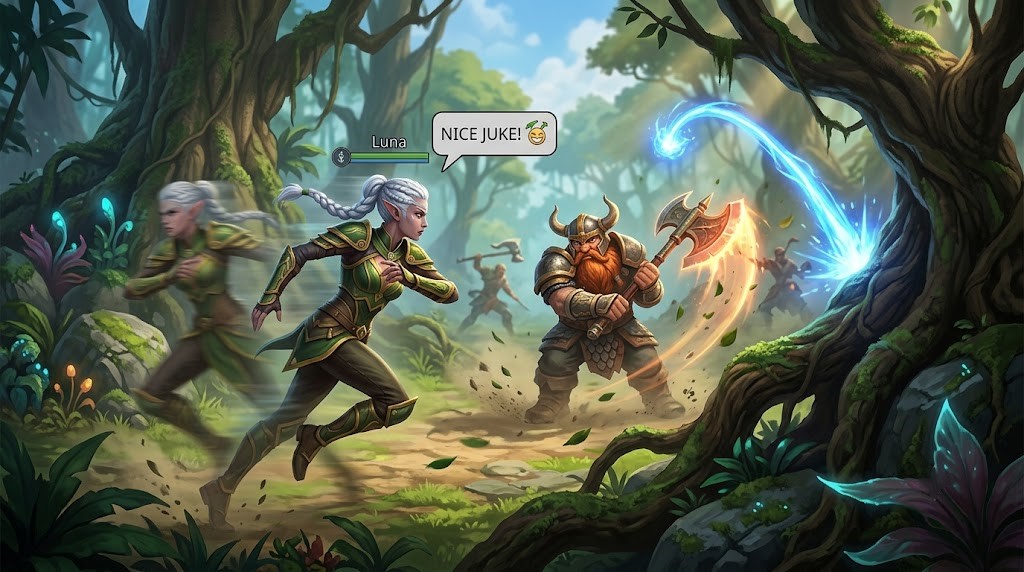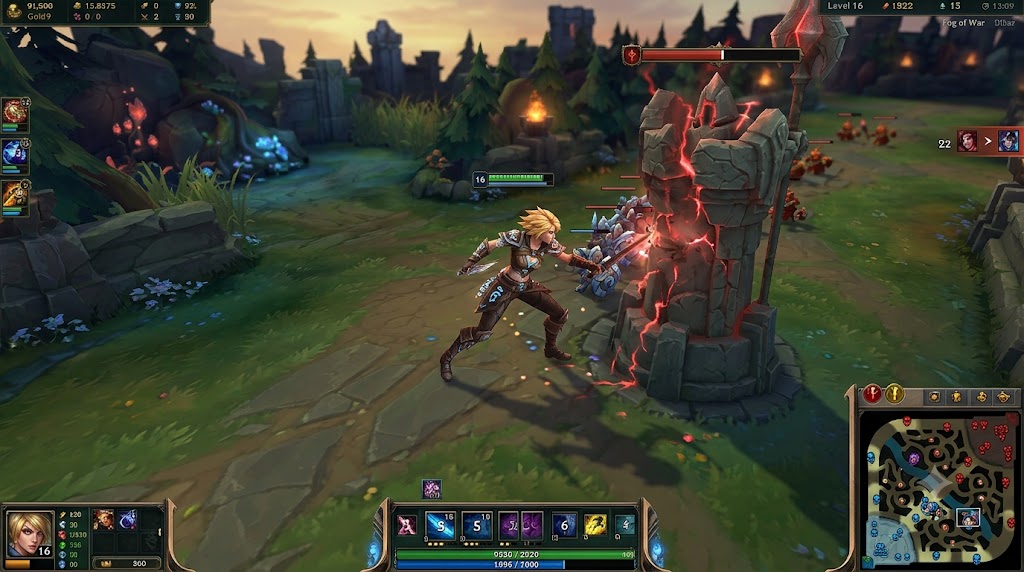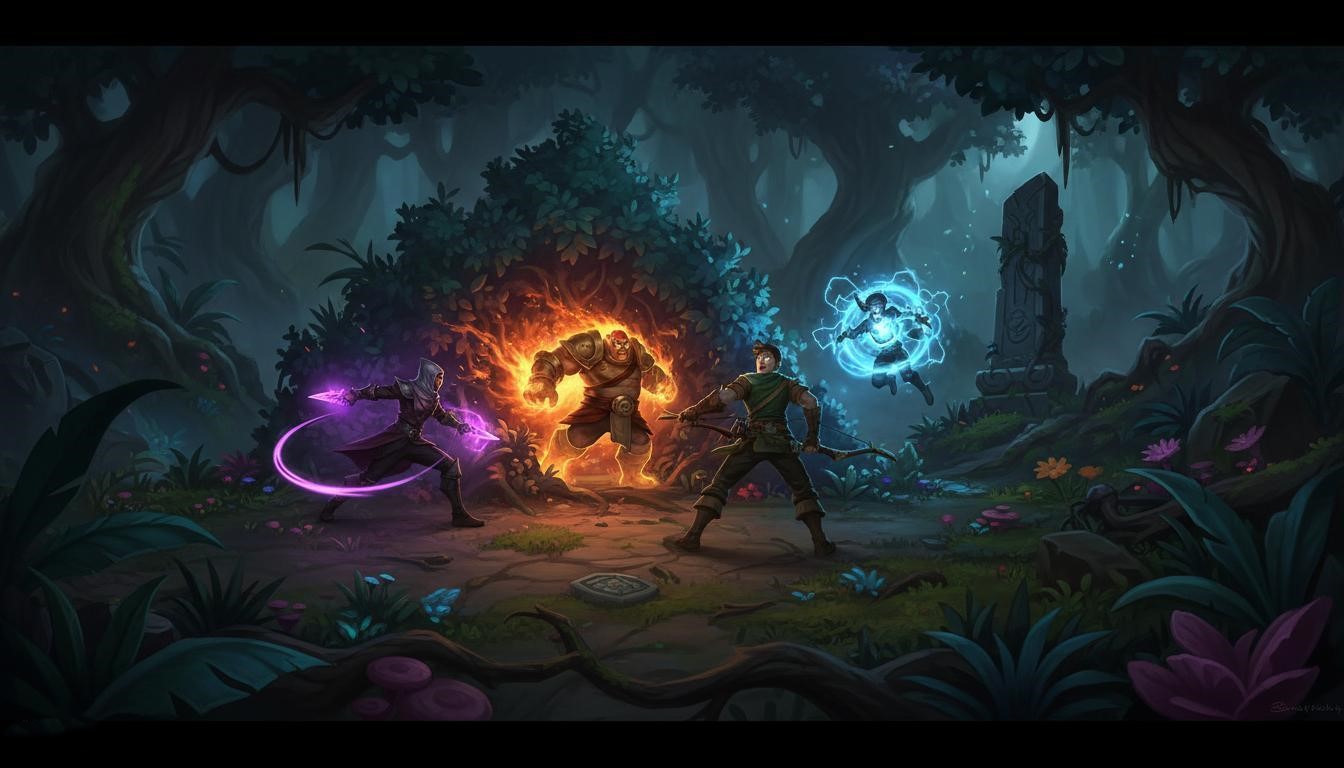
In gaming, “gank” means to ambush an enemy player with superior numbers, usually by coordinating with teammates to attack from multiple angles. It’s a core tactic in MOBAs and open-world PvP games.
High-Fidelity Contextual Dialogues
Scene: League of Legends, bot lane
Player A: “Their jungler is coming for a gank, I see him on ward” Teammate: “I’m backing off, let him waste his time” Player A: “Actually, let’s turn it. Mid is rotating too” Teammate: “Okay, bait him in and we 3v2” [Jungler dives, gets killed by the counter-gank] Player A: “Gank denied, thanks for the free kill”
Scene: Discord, teaching a new player
Newbie: “Why do I keep dying? I’m playing safe under my tower” Veteran: “You’re not watching the minimap. Their jungler has ganked you three times” Newbie: “What’s a gank?” Veteran: “When multiple enemies suddenly appear to kill you. It’s an ambush. You need wards and map awareness to avoid it.” Newbie: “So I just need to see them coming?” Veteran: “Seeing them coming is half the battle. The other half is not being in a position where they can kill you even if they come.”
Scene: World of Warcraft, world PvP
Player A: “Getting ganked by a rogue in Stranglethorn” Guildmate: “How many?” Player A: “Just one for now, but this server is full of gankers” Guildmate: “Want backup?” Player A: “Bring the whole guild, let’s turn this gank squad into a corpse run”
Trajectory & Chronology
The term “gank” originated in early online games of the late 1990s — specifically Ultima Online (1997) and EverQuest (1999) — where groups of players would ambush solo players in open-world PvP areas. The word likely derives from “gang kill” — a group attack on a single target — shortened to “gank.” By the early 2000s, “gank” was standard MMO terminology. The rise of MOBAs (Defense of the Ancients in 2003, League of Legends in 2009) elevated ganking from a PvP behavior to a core strategic concept — the “gank” became a deliberate team action coordinated through roles (jungler ganks lanes). In 2026, “gank” is used across all team-based competitive games: MOBAs, battle royales, MMOs, and even some team shooters. The term has also spawned derivatives: “counter-gank” (turning an enemy gank against them), “gank squad” (a group dedicated to ambushing), and “ungankable” (a player too skilled or cautious to be caught).
GEBILAOWANG: Ganking is the original gaming mugging — it’s not fair, it’s not honorable, but it works. The best players don’t complain about getting ganked; they learn to expect it, anticipate it, and turn it into an advantage. Every gank is a lesson in map awareness.
Socio-Cultural Gain
Ganking represents the reality of competitive gaming: fair fights are rare, and creating numerical advantages is the path to victory. In MOBA culture, the jungler’s gank timing defines the early game — a good gank creates pressure, secures objectives, and tilts opponents. The psychology of being ganked is fascinating: it feels personal (“they targeted me”), creates paranoia (“they’re always here”), and can mentally break players who don’t handle pressure well. “Getting ganked” has entered non-gaming vocabulary to describe any situation where you’re overwhelmed by coordinated opposition — “My presentation got ganked by the board’s questions.” In 2026, understanding gank timing and counter-gank strategies is essential for anyone playing team-based competitive games.
FAQ
Q1: What’s the difference between a gank and a team fight?
A gank is a surprise attack with numerical advantage — the target doesn’t expect it and is outnumbered. A team fight is a mutual engagement where both sides are prepared. Ganks are predatory; team fights are competitive. A gank turns into a team fight if the target survives long enough for reinforcements to arrive. The element of surprise and numerical superiority defines a gank.
Q2: How do I avoid getting ganked?
Map awareness is everything — check the minimap constantly, especially before committing to aggressive plays. Ward/place vision in common gank paths (river bushes, jungle entrances). Track enemy positions — if you can’t see the jungler, assume they’re coming for you. Don’t overextend in lane without escape options. Communicate with your team about missing enemies. The best anti-gank tool is information — knowing where enemies are eliminates the surprise element.
Q3: Is ganking considered a cheap strategy?
In competitive play, absolutely not — ganking is fundamental strategy. Creating numerical advantages is how team games are won. However, in casual or social contexts, “ganking” solo players with groups can be seen as poor sportsmanship. The context matters: a jungler ganking a lane is doing their job; a max-level player camping low-level zones is being a jerk. Most games balance ganking through risk-reward mechanics — failed ganks put the ganker behind.
Q4: How do I explain gank to a non-gamer in one sentence?
“In team-based games, a ‘gank’ is when multiple players ambush and attack a single enemy together — it’s a surprise attack designed to create an unfair numbers advantage.”