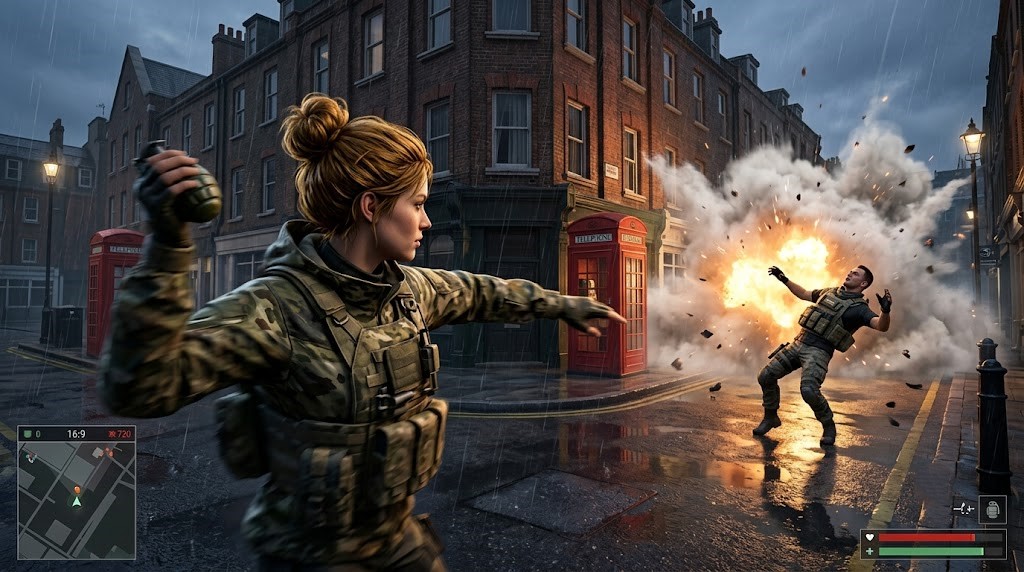
For a word that gets called out thousands of times a day, it has a surprisingly boring origin.
Flank in the Wild
Over in Twitch chat:
Three callouts. Zero time to react. That’s the beauty of it.
Meanwhile on Discord:
The silence says everything.
In-game, you’ll see it in every FPS and MOBA. In Valorant, it’s the Omen teleport behind A site. In CS2, it’s the lurker sneaking through Banana while everyone stacks B. In Overwatch, it’s the Tracer appearing behind your support line while your toxic DPS ignores the callout. If you’re getting shot from an angle you didn’t check, you just got hit by it. Ask any noob who forgot to watch their back.
How It Became a Thing
“Flank” comes from actual military terminology: attacking an enemy’s side, where they’re weakest. Gaming borrowed it early. Counter-Strike 1.6 players were calling it in the early 2000s. By the 2010s, it was universal across every competitive game.
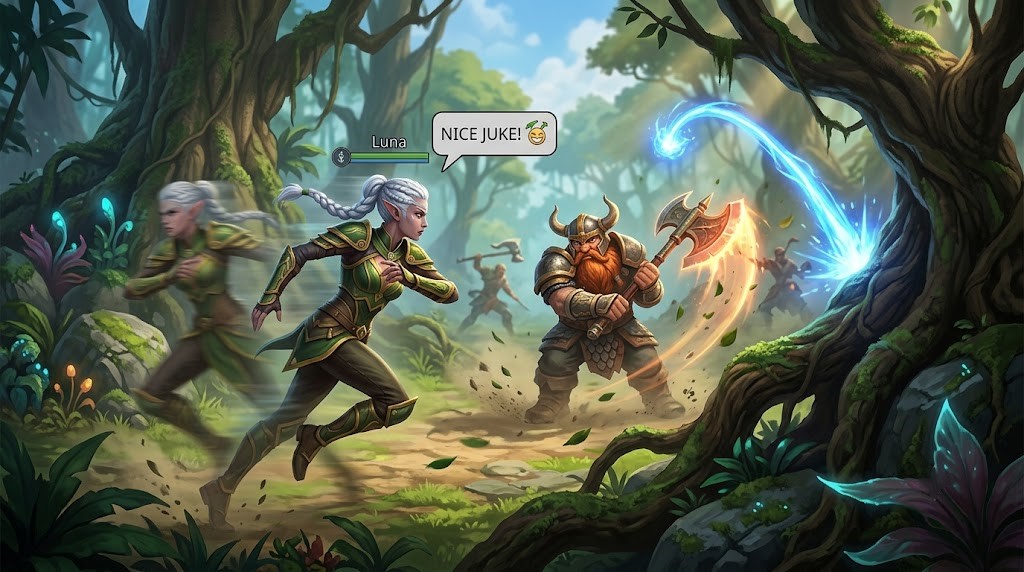
What makes it special is that it’s both a verb and a noun. “I’m flanking” (verb) vs “watch the flank” (noun). The word also carries tactical weight. A good one wins rounds. A bad one gets you killed alone while your team wonders where you went.
The phrase also benefits from being understood across all game types. You don’t need to explain what it is. Even new players get it after one death from behind. It’s the kind of word that transcends language barriers. Call it out in any lobby and everyone turns around.
Why It Hit Different
A flank isn’t just positioning. It’s psychology.
When you pull one off, you’re not just getting kills. You’re making the enemy team paranoid. They start checking corners they never checked before. They split their attention between the objective and their backline. Even if you don’t get a kill, you’ve disrupted their entire setup.
But here’s the thing: it’s a gamble. You’re leaving your team down a player while you take the long way around. If you die, your team is fighting 4v5 with no info. If you succeed, you’ve won the round. There’s no middle ground.
The best players know when to do it and when to just hold angles. Even a smurf can get caught out by a well-timed one. The worst players try it every round and wonder why their KDA sucks. It’s a judgment call, and most players get it wrong.
FAQ
Is this the same as lurking?
Kinda, but not quite. Lurking is about staying hidden and gathering info. This is about getting behind the enemy to attack. You can lurk without attacking, but you can’t really do this without lurking first. Here’s the breakdown:
| Flank | Lurk |
|---|---|
| Goal: attack from behind | Goal: gather info |
| High risk, high reward | Low risk, low reward |
| Team knows you’re gone | Team might not know where you are |
| Wins rounds | Sets up rounds |
When should I do it?
When your team has site control and the enemy is focused forward. Never try it when your team is already losing the fight. You’ll arrive to clean up a 1v4. Timing is everything.
Do people still call it in ranked?
All the time. In Valorant it’s “flank, flank, flank.” In CS2 it’s “behind, behind.” In Apex it’s “third party from the back.” The concept is fundamental to competitive play.
How do I explain it to a non-gamer?
Tell them it’s sneaking around the back of a building while your friends distract the guard out front. If it works, you’re a hero. If it doesn’t, you’re the idiot who got caught alone.