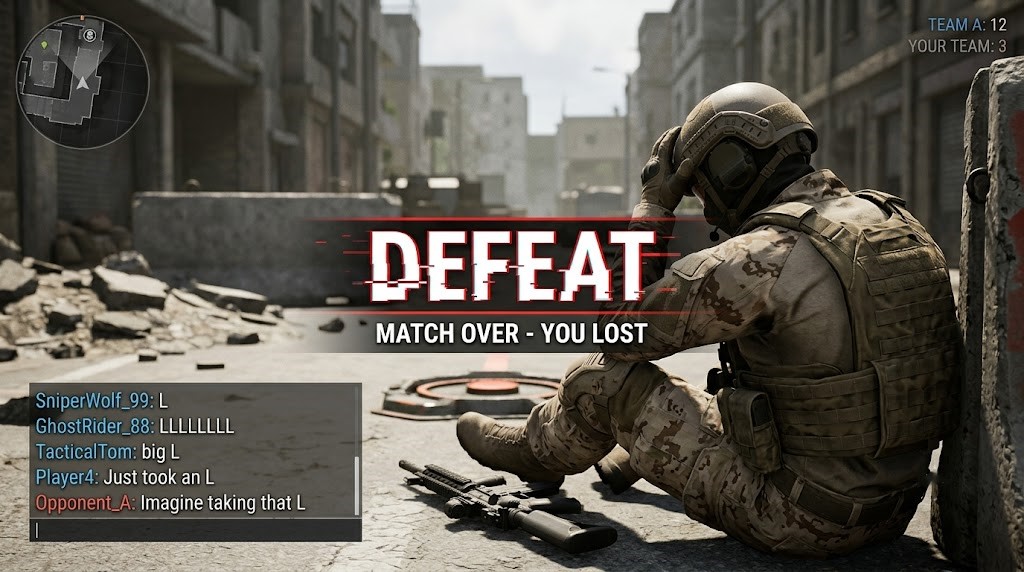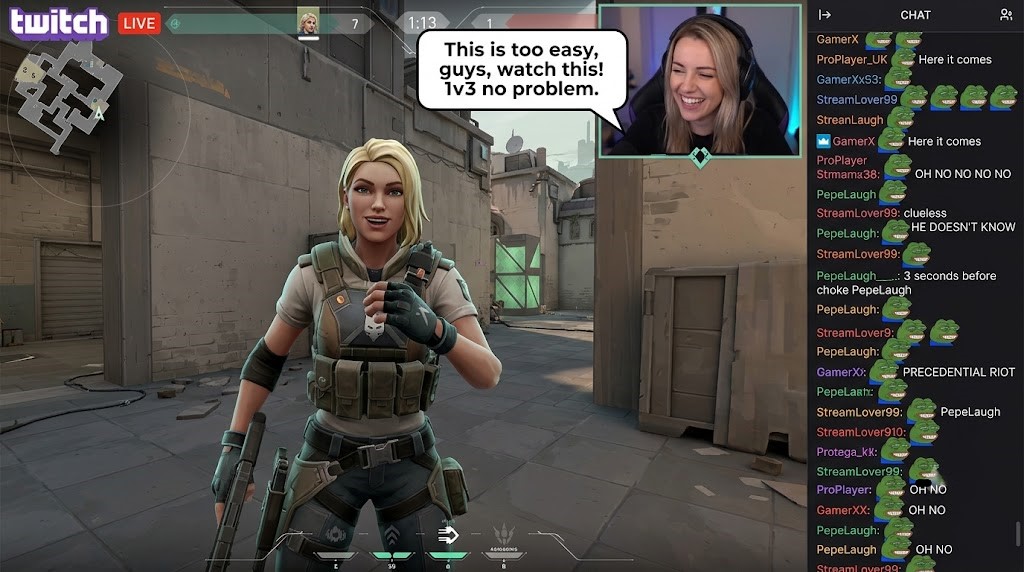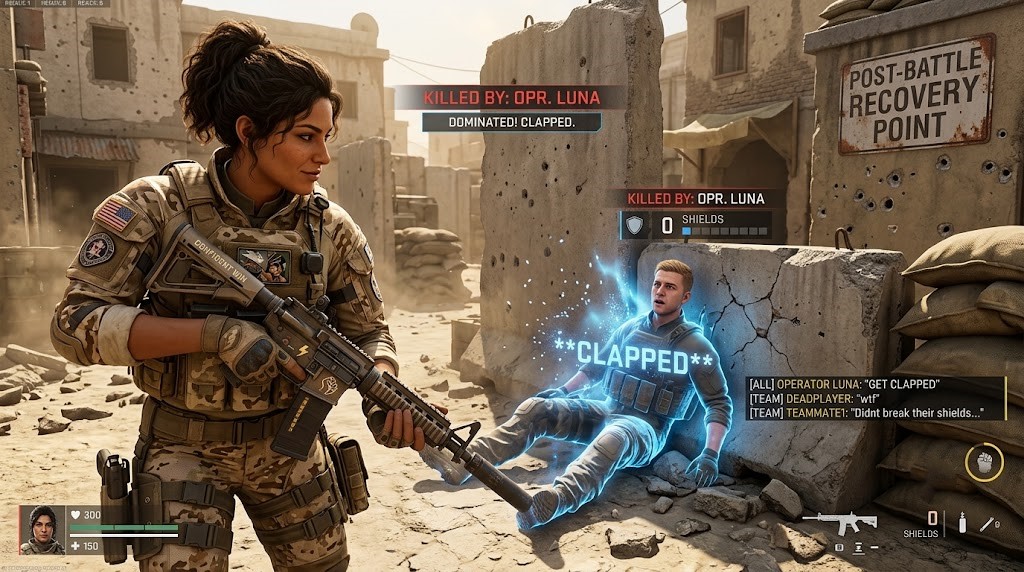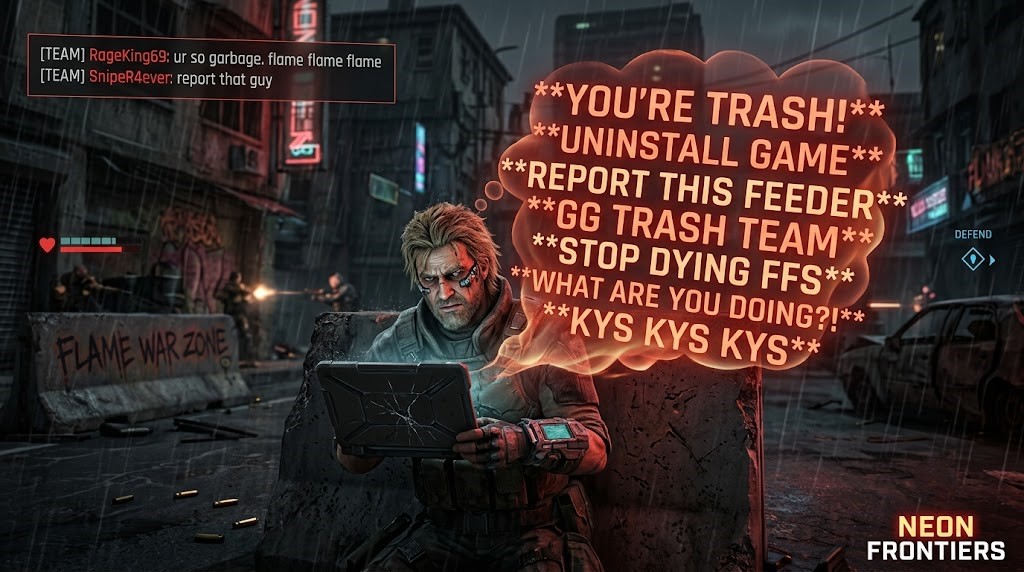
Few things tilt a lobby faster than this. Not the fire kind. The verbal kind. The kind where your support decides you’re the reason the team is losing and spends the next twenty minutes typing essays about your lineage in all-chat. If you’ve played ranked in anything, you’ve seen it. If you’re honest, you’ve probably done it.
To flame someone is to insult them, attack them, or generally be a jerk in chat. It started as early internet slang for sending hostile messages, but in gaming it’s basically shorthand for “toxic trash talk directed at teammates.” The weird part? Everyone knows it doesn’t work. No one has ever played better because someone called them trash. Yet it keeps happening. Every. Single. Game.
How It Became a Thing
The term predates gaming by decades. “Flaming” was already internet slang in the ’80s and ’90s for hostile online arguments. Usenet forums, early chat rooms, IRC, it was everywhere. The word comes from the idea that these messages were like actual fire: hot, destructive, and spreading fast.
Gaming adopted it naturally because competitive games are basically pressure cookers for human emotion. League of Legends, Overwatch, CS2, Valorant, every team-based competitive game has a flaming problem. In 2020, Wired published a piece explicitly listing it alongside sexual harassment, hate speech, and doxing as core toxicity behaviors in online gaming. That’s the level we’re talking about.
Some communities have tried to reclaim it. “Flame” as a noun can mean “harsh but fair criticism” in certain esports circles. Coaches might say “I need you to flame my gameplay” meaning they want brutally honest feedback. But in public matchmaking? It’s almost always negative.
What Flame Sounds Like In-Game
Post-game lobby, Overwatch ranked:
tank: “our dps had 3k damage in 12 minutes”
dps: “maybe if you weren’t feeding every fight”
tank: “you’re literally bronze for a reason”
support: “can we just report and move on”
Or the more creative version:
teammate: “you play like you’re using a trackpad”
you: “i am”
teammate: “…”
teammate: “that explains so much”
The self-aware comeback is the only real defense. You can’t trash someone who’s already roasting themselves.
Why Gamers Can’t Quit
Because losing feels bad and blaming someone else feels better. Simple psychology. The person doing it is usually tilted from a previous game, looking for a scapegoat, and lacking the emotional tools to handle frustration. As one Overwatch player put it: “They go on the next game, more tilted, do the same, another defeat, and so on.”
The worst part is it’s contagious. Studies show that exposure to toxicity in one game increases the likelihood you’ll be toxic in the next. One flamer creates two. Two create four. Before you know it, the entire community is a dumpster fire.
Most serious players just mute all-chat now. It’s not worth the mental tax. You can’t reason with someone who’s already decided you’re the reason their life is falling apart.
A quick framework for spotting the difference:
- “Your positioning was rough that round”, feedback
- “You’re trash uninstall”, toxicity
- “We need to group before engaging”, callout
- “gg our team is bots”, disguised as resignation, still toxic
FAQ
Is this the same as trash talk?
Trash talk is between opponents, usually competitive but not necessarily malicious. This is directed at teammates and almost always malicious. The line is thin but it exists. “You’re bad” in all-chat is trash talk. “You’re bad and that’s why we’re losing” in team chat is something else entirely.
Can you get banned for it?
Absolutely. Every major game has reporting systems for verbal abuse. Riot Games, Blizzard, Valve, they all hand out chat restrictions and suspensions for excessive flaming. Repeat offenders get permanent bans. Is it enforced perfectly? No. But the systems exist and they do catch people.
How do I deal with someone doing this to me?
Mute them. Seriously. Don’t argue, don’t defend, don’t engage. Mute and play your game. Every second you spend reading their garbage is a second you’re not focusing on the match. The mute button is the most powerful tool in any competitive game.