Back in 2005, “free” and “video game” barely belonged in the same sentence. Games came in boxes. They cost $50. That was the deal.
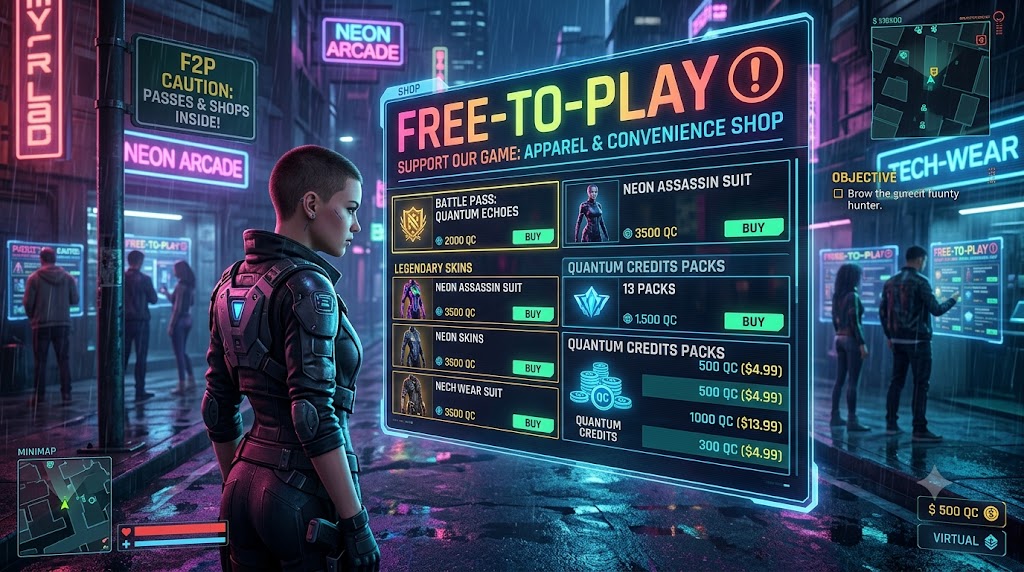
F2P means free-to-play: you download it, you play it, you pay nothing upfront. The money shows up later, in skins, battle passes, and boosts. As someone who mostly plays single-player stuff I bought once, the F2P meaning in gaming still feels slightly cursed to me — but it’s how most of the planet plays now.
The Rise of F2P
Where did F2P come from? The model got its start in South Korean online games around the turn of the millennium. Nexon was experimenting with free games funded by item sales as early as 1999, and MapleStory (2003) proved you could build an empire on a $0 price tag.
Western MMOs followed once subscriptions started dying. The Lord of the Rings Online went free in 2010 and tripled its revenue. EverQuest’s hybrid switch came with a 125% spike in item sales. Then Team Fortress 2 dropped its price to nothing in 2011, Fortnite turned the battle pass into a money printer a few years later, and the debate was over.
The F2P origin story, short version: Asia figured it out, the West resisted, the West lost.
How F2P Took Over Gaming
Look at the biggest games on earth. Fortnite, Warzone, Valorant, League of Legends, Genshin Impact. Every one of them is F2P, and together they set the entire multiplayer meta for how games launch now.
The model won because it removed the only barrier that matters: asking for money before the fun. Almost every giant free game is a PvP machine, because PvP never runs out of content and skins never run out of buyers.
It’s also an identity now. “I’m F2P btw” is a badge, proof your account is built on grind instead of wallet. And the stigma fully flipped: twenty years ago free games meant sketchy launchers and toolbars. Now the $70 box release is the risky purchase. Wild. (I still buy my RPGs on sale, but I’m aware I’m the dinosaur here.)
F2P in Real Conversations
Picture your friend asking why you just dropped $70 on a game:
“why would you pay for games in 2026” “because I like owning the thing I’m playing” “ok whale” “I’m literally F2P in everything else, leave me alone”
You’ll also hear it as a warning label. “It’s F2P, so expect a battle pass and a shop tab the size of the settings menu.” And in gacha games it’s a flex: clearing endgame content while staying F2P is basically its own speedrun category.
Since people blur these together constantly, here’s the cheat sheet:
| Upfront cost | Where the money is | Vibe | |
|---|---|---|---|
| F2P (cosmetic) | $0 | skins, battle passes | fair grind |
| Freemium | $0 | unlocking the actual content | a demo with dreams |
| Buy-to-play | $60-70 | expansions, DLC | the old ways |
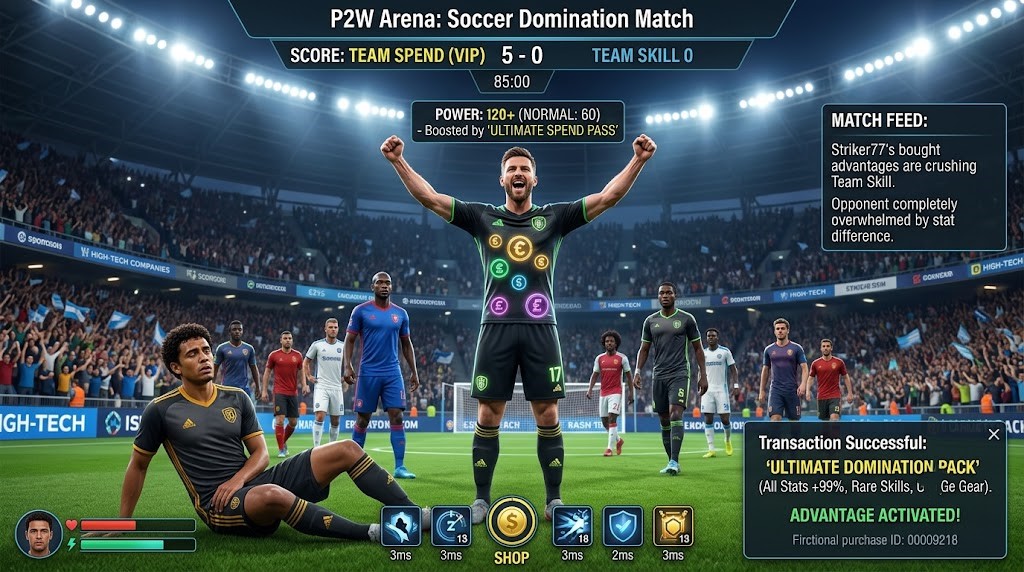
| Pay-to-win | $0 | power itself | wallet diff |
FAQ
Does free-to-play always turn into pay-to-win?
Honestly? No, and the good ones are careful about it. F2P vs pay-to-win comes down to what the shop sells. Cosmetics and convenience, fine. Actual power, run. The moment a free game sells strength, players notice, and the reviews get loud.
What does F2P actually mean?
Free-to-play. You can download and play the core game without paying anything. Nobody promises the shop won’t flirt with you the entire time.
Are F2P games really free?
Yes and no. You can absolutely play most of them forever at $0, and plenty of people do. The business model is built on the small slice of players who spend a lot. If you’ve got self-control, it’s genuinely free. If you don’t, it’s the most expensive game you’ll ever play.