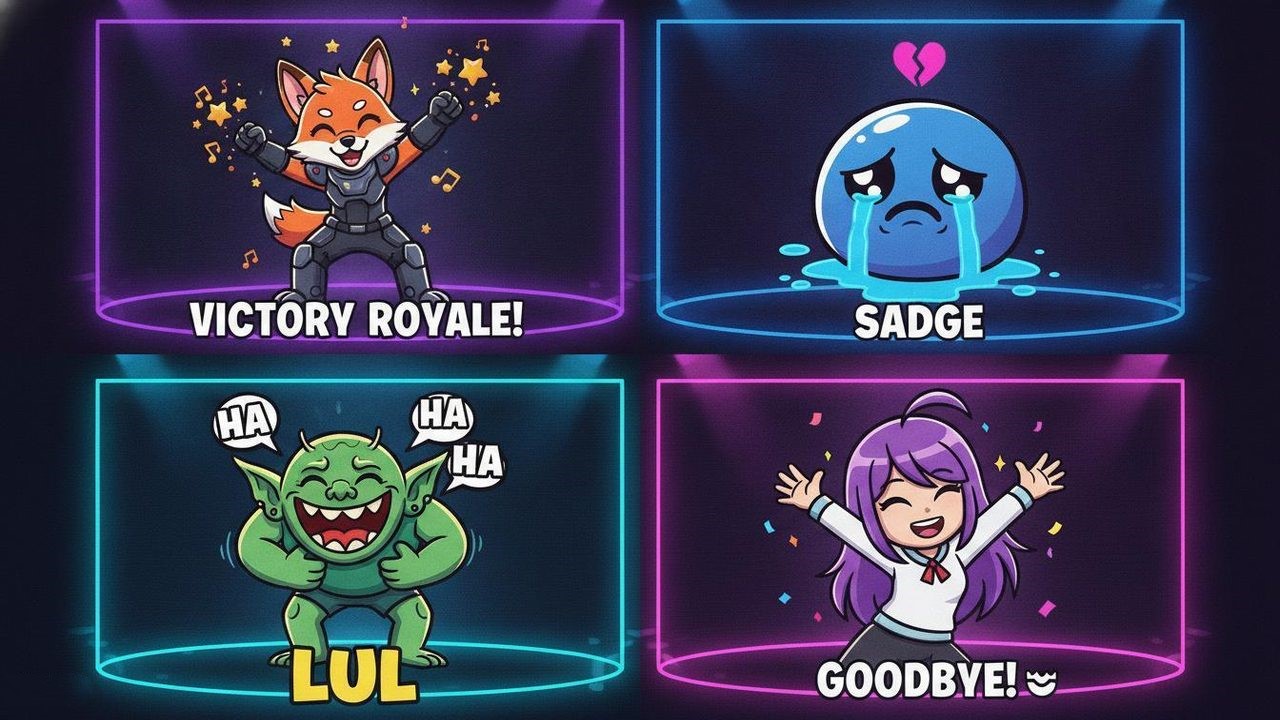
In gaming, an emote is a character animation or expression used to communicate. Ranges from dances to taunts to celebrations.
Trajectory & Chronology
Emotes originated in MMORPGs like World of Warcraft (2004), where players could /dance, /wave, and /laugh. League of Legends (2009) introduced champion-specific taunts and dances. Fortnite (2017) took emotes mainstream with licensed dances and the Battle Pass system. Twitch emotes (Kappa, PogChamp, MonkaS) created a parallel emote culture in streaming. By 2026, emotes are universal across gaming and streaming platforms.
GEBILAOWANG: Emotes are the universal language of gaming — you don’t need to speak the same language to understand a dance or a taunt.
High-Fidelity Contextual Dialogues
Scene: After a kill
Player A: uses dance emote on enemy’s body Player B: “The disrespect, I love it”
Scene: Pre-game lobby
Player A: “Everyone do the floss!” Whole lobby starts flossing
Scene: Post-game
Player A: “I need that new emote from the battle pass” Player B: “It’s tier 100, good luck grinding”
Socio-Cultural Gain
Emotes have evolved from simple taunts into a core component of gaming culture and monetization. They’re one of the primary ways players express themselves in online games, transcending language barriers. The rarity and exclusivity of certain emotes (like Fortnite’s Floss or Renegade) has created a digital status symbol economy. Emote culture has also sparked controversy, with some dances facing copyright disputes from original creators. In 2026, emotes remain a billion-dollar industry and an essential part of the gaming social experience.
FAQ
Q1: Can emotes be used during combat?
Usually no — most games lock emotes during combat to prevent unfair distractions.
Q2: Are emotes only in multiplayer games?
Mostly, but some single-player games have gesture systems too.
Q3: Why do people buy emotes?
Expression, social bonding, and sometimes pure flex. A rare emote says “I was there.”