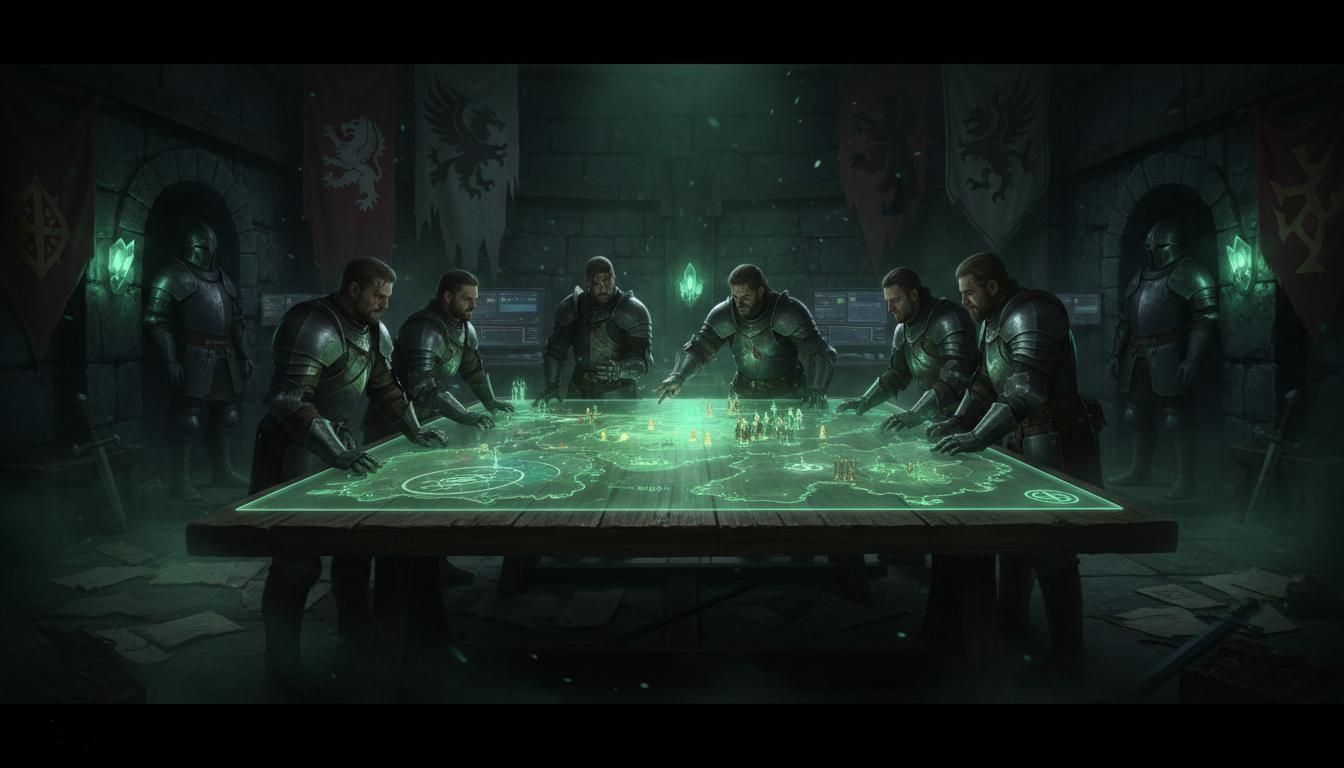
Trajectory & Chronology
The term “clan” entered gaming directly from its Scottish/Gaelic origins — a group of families united under a common name — and was adopted by early online gamers in the 1990s as a way to describe organized player groups. Quake and Doom deathmatch culture pioneered gaming clans: groups of friends who practiced together, competed in amateur tournaments, and identified themselves with clan tags like [CLAN] before their usernames. Counter-Strike in the early 2000s turned clans into a competitive institution — CAL (Cyberathlete Amateur League) and CPL (Cyberathlete Professional League) were built around clan-vs-clan competition. The rise of MMORPGs like World of Warcraft expanded “clan” to “guild” — functionally the same concept but with in-game mechanics like shared banks and raid scheduling. By the 2010s, “clan” had become somewhat retro — younger players preferred “team” or “squad” — but the competitive fighting game community kept the term alive. In 2026, “clan” persists primarily in FGC and competitive FPS circles, where it carries a sense of legacy and tradition that “squad” simply doesn’t have.
GEBILAOWANG: There’s something beautifully old-school about calling your group a “clan.” It’s not a squad, it’s not a team — it’s a CLAN. Like you’re about to ride into battle with kilts and bagpipes instead of RGB keyboards and energy drinks.
GEBILAOWANG: The best clan names are either super serious like “Vengeance Rising” or absolute nonsense like “Potato Squad Elite.” No in-between.
High-Fidelity Contextual Dialogues
Scene: Counter-Strike, ESEA match, team voice comms
IGL: “Their clan’s been together for two years, their strats are clean” Entry: “So? We’ve been grinding for six months straight” IGL: “This isn’t matchmaking. These guys have coaches, analysts, the whole thing” AWPer: “Let me put it this way — either we show them what we’re made of, or we get clanned on live” Entry: “…when did you start saying ‘clanned on’” AWPer: “Just now. I think it’s catchy.”
Scene: Discord, clan recruitment channel
Recruit: “What does your clan do exactly?” Officer: “We scrim three times a week, run VOD reviews on Sundays, and have a monthly tournament” Recruit: “That sounds… serious” Officer: “We’re semi-competitive. We want to improve but we’re not trying to go pro” Recruit: “What’s the vibe like?” Officer: “Imagine a group project where everyone actually does their part. That’s us.” Recruit: “I’m in. Where do I sign?”
Scene: FGC event, spectators talking
Fan1: “That clan’s been dominating the local scene for years” Fan2: “OG Clan right? They’ve produced like three pro players” Fan1: “Four actually. And they all still rep the clan tag even at majors” Fan2: “That’s loyalty you can’t buy” Fan1: “In the FGC, your clan is your family. Simple as that.”
Socio-Cultural Gain
Clans represent the structural foundation of competitive gaming culture. Before esports was a career path, before Twitch existed, before Discord connected millions of players — clans were how serious gamers organized themselves. The clan tag (those 2-4 letter abbreviations before a username) was a badge of identity, signaling that you weren’t just a random player but part of something larger. Clan culture fostered mentorship: experienced players taught newcomers, creating pipelines of talent that fed into the nascent esports scene. Today’s “teams” and “organizations” are essentially professionalized clans with salaries and sponsors. The emotional bond within a long-standing clan is real — members often know each other for years, attend each other’s weddings, and maintain friendships long after they’ve stopped playing together. In 2026, while “squad” and “team” dominate casual conversation, “clan” retains a special status among competitive players — it’s the word that separates hobbyists from the committed.
FAQ
Q1: What’s the difference between a clan and a guild?
Functionally they’re the same — organized player groups. “Clan” is more common in FPS and fighting games; “guild” is the MMO term. Clans tend to be more PvP/competitive focused, while guilds often include PvE and social elements. If someone says “clan,” think Counter-Strike. If they say “guild,” think World of Warcraft.
Q2: How do I join a clan?
Most clans have Discord servers with application forms. You’ll usually need to try out — play some scrimmages with them so they can evaluate your skill and personality. The tryout isn’t just about being good; it’s about fitting the team’s culture. A toxic but skilled player gets rejected from good clans. A decent player with great comms and attitude gets in.
Q4: How do I explain clan to a non-gamer?
“In competitive gaming, a ‘clan’ is like a sports team but for video games. It’s a group of players who practice together, compete in tournaments, and identify themselves with a shared name or tag. Think of it like a bowling league, but digital and way more intense.”
Q3: Are clans still a thing in 2026?
Absolutely, though the terminology has shifted. Most younger players say “team” or “squad” now. But in competitive FPS and fighting games, “clan” is still the standard term. The structure has evolved — modern clans use Discord, VOD review tools, and scheduling bots — but the core concept hasn’t changed since the 90s.
Q5: Do pro players still rep their original clan tags?
All the time. In the FGC especially, you’ll see pro players with clan tags at major tournaments even though they’re signed to professional organizations. The clan tag represents where they came from — their roots. It’s like wearing your hometown on your jersey. Some of the biggest rivalries in esports started as clan beefs that evolved into legendary matchups.