Socio-Cultural Gain
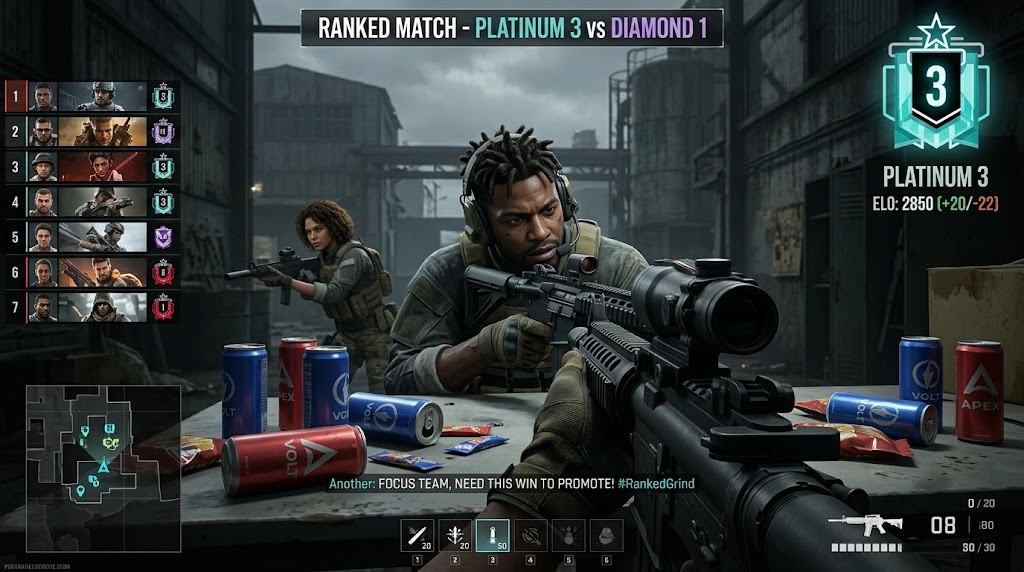
Choke is one of gaming’s most psychologically loaded terms. It doesn’t just describe losing — it describes a specific kind of losing that feels worse than normal defeat. When you choke, you had it. You were winning. And then your hands started shaking, your aim went off, and you watched yourself throw it all away. The term carries an implicit judgment: choking is losing that you should have prevented.
In competitive gaming, the fear of choking creates a self-fulfilling prophecy. Players who worry about choking often play too cautiously when ahead, which ironically increases their chances of losing. Commentators and teammates use “choke” as both analysis and insult — “they choked” explains what happened while also assigning blame. This dual function makes it one of the most emotionally charged words in competitive vocabulary.
Trajectory & Chronology
“Choke” entered sports vocabulary in the early 20th century, originally describing athletes who performed poorly under pressure. The term’s transition to gaming happened naturally through the 1990s and 2000s as competitive gaming adopted sports terminology. Fighting game communities (Street Fighter, Tekken) were among the first to use it regularly, describing players who dropped combos or made critical errors in tournament matches.
By the 2010s, “choke” was standard across all competitive gaming genres — FPS, MOBA, battle royale, RTS. Esports broadcasters popularized the term further, using it as shorthand for dramatic collapses during high-stakes matches. The 2020s saw “choke” expand beyond competitive play into casual gaming, where players use it self-deprecatingly to describe any failure under pressure.
By 2026, “choke” is so ingrained in gaming culture that it barely registers as slang. It’s standard vocabulary, used across all skill levels and game types. Unlike trendier terms, choke’s longevity comes from describing a universal human experience — performance anxiety — that will never go away.
GEBILAOWANG: Choking is the universal gaming fear. Everyone’s done it, everyone’s seen it, and nobody forgets it.
High-Fidelity Contextual Dialogues
Scene: Post-match debrief, team lost a lead
Coach: “We were up 12-3. What happened?” Player1: “I choked. Plain and simple.” Player2: “We all choked, not just you” Player1: “Nah I missed shots I never miss. That was a choke.”
Scene: Twitch chat, pro player misses easy clutch
Chat: “CHOKE” Chat: “BIGGEST CHOKE OF 2026” Chat: “he choked so hard he needs CPR” Chat: “I felt that choke through my screen”
Scene: Discord, friend admitting failure
Maya: “I had the 1v3 and I whiffed every shot” Jordan: “You choked” Maya: “I absolutely choked. I could feel my hands shaking” Jordan: “Happens to the best of us”
FAQ
Q1: What’s the difference between choking and just losing?
Choking specifically means losing from a winning position due to pressure. Going 0-3 from the start isn’t choking — that’s just getting outplayed. Going 12-3 up and then losing 13-15? That’s choking. The key elements are: (1) you were clearly winning, (2) the loss was self-inflicted through uncharacteristic mistakes, (3) pressure was a factor. Losing a close game isn’t choking either — choking implies a collapse.
Q2: How do you stop choking in competitive games?
There’s no guaranteed fix, but experienced players recommend: (1) Don’t think about the score — focus on the next round, not the match outcome. (2) Stick to your normal playstyle instead of playing overly safe. (3) Accept that some choking is normal and don’t let the fear of it become self-fulfilling. (4) Practice high-pressure scenarios in scrims so tournament matches feel familiar. Many pros say the key is treating every round the same, whether you’re up 12-3 or down 0-12.
Q3: Is ‘choke’ only used in competitive gaming?
It started in competitive spaces but has spread to casual play too. Casual players use it self-deprecatingly — “I choked that boss fight” or “total choke on the final platform.” However, the term carries more weight in competitive contexts where stakes are higher. Calling a pro player a “choker” is a serious accusation about their mental game, while saying “I choked” in casual play is just admitting you messed up under pressure.