Trajectory & Chronology
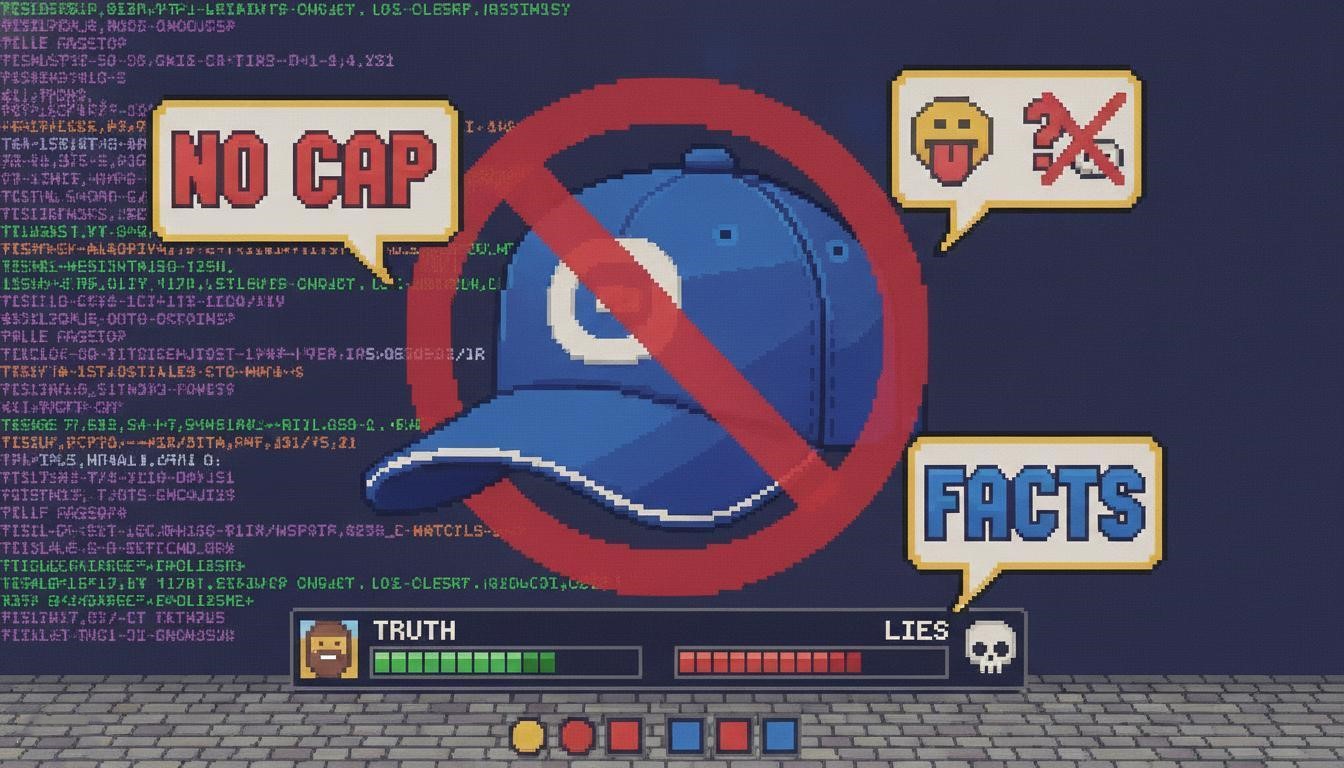
Cap emerged from African American Vernacular English (AAVE) in the 1990s, originally meaning “to brag or exaggerate.” The term sat in Southern hip-hop circles for years before Future and Young Thug dropped “No Cap” in 2017, turning the phrase into a viral sensation. The song’s chorus — “Yellow diamonds like bananas, that’s cap… no cap” — introduced millions to the concept.
TikTok accelerated its spread dramatically in 2020. The 🧢 emoji became visual shorthand for “cap,” and “no cap” became one of the most common phrases on the platform. Gaming communities adopted it organically through the overlap between TikTok and Twitch culture — by 2022, “cap” and “no cap” were standard vocabulary in Discord servers and in-game chat.
By 2026, cap is so mainstream that Merriam-Webster includes a dedicated slang definition. The term has evolved beyond its AAVE origins to become part of standard digital English, used casually across gaming, social media, and everyday conversation.
GEBILAOWANG: Cap is proof that a single word can carry an entire culture’s relationship with truth and lies.
High-Fidelity Contextual Dialogues
Scene: In-game voice chat, someone claims an impossible play
Player1: “I just no-scoped him from across the map” Player2: “Cap” Player1: “No cap, I have the clip” Player2: “…alright send it”
Scene: Discord, planning a gaming session
Jordan: “I’ll be on at 8, no cap this time” Alex: “You said that last week and ghosted us” Jordan: “That was different, I had homework” Alex: “Cap. You’ll be ‘doing homework’ again”
Socio-Cultural Gain
Cap fills a unique communicative need in gaming culture — a single-syllable way to call out lies. Before “cap,” gamers might say “bullshit” or “yeah right,” but neither has the same cultural weight. “Cap” carries an entire ecosystem of meaning: the 🧢 emoji, “no cap” as truth affirmation, “stop capping” as a command, and “capper” as an insult for habitual liars.
The term also represents how AAVE continues to shape mainstream internet culture. Like “based,” “ate,” and “gyat” before it, “cap” traveled from Black communities to global gaming vocabulary through hip-hop and social media. This pattern is so consistent that it has become the primary pipeline for new slang entering gaming spaces.
FAQ
Q1: What’s the difference between cap and lying?
“Cap” is lighter and more playful. Calling someone a liar is serious and often hostile. Saying “that’s cap” is casual teasing — the kind of thing friends say to each other. It can also refer to exaggeration, not just outright falsehood. “I got 30 kills” when you got 20 is cap, even if it’s directionally true.
Q2: Where did ’no cap’ come from?
“No cap” emerged as the natural opposite of “cap” around 2017, popularized by rappers Future and Young Thug. It means “no lie” or “for real” — a way to emphasize honesty. The phrase spread through TikTok and gaming culture to become one of the most common slang expressions of the 2020s. Using “no cap” signals that you’re being genuine, not exaggerating.
Q3: Is cap still used in 2026?
Absolutely, and it’s one of the most stable slang terms in current use. Unlike trendier expressions that flare and fade, cap has become so naturalized that many users don’t even register it as slang. Merriam-Webster’s inclusion confirms its staying power. In gaming specifically, it’s standard vocabulary for calling out exaggerated claims.