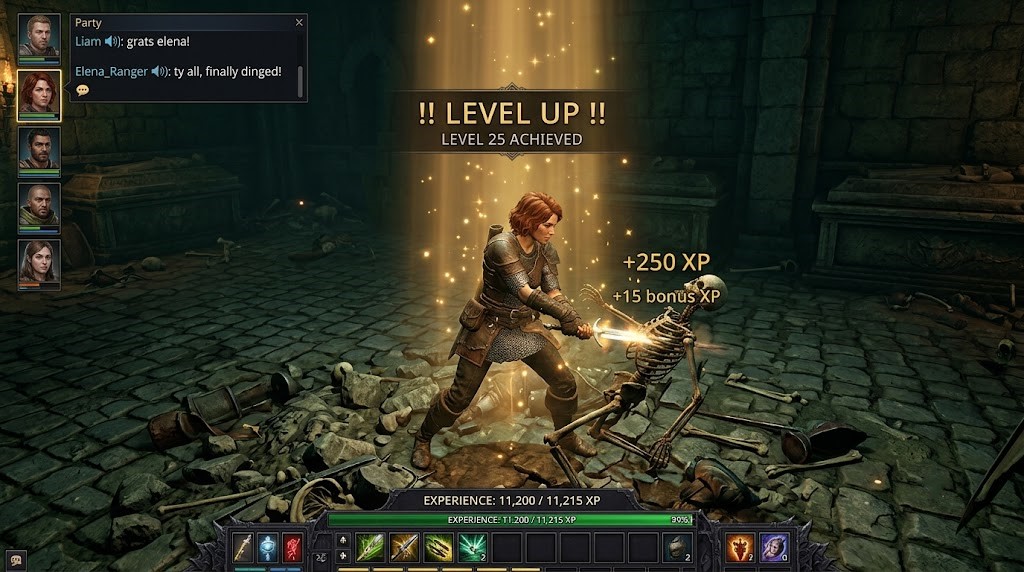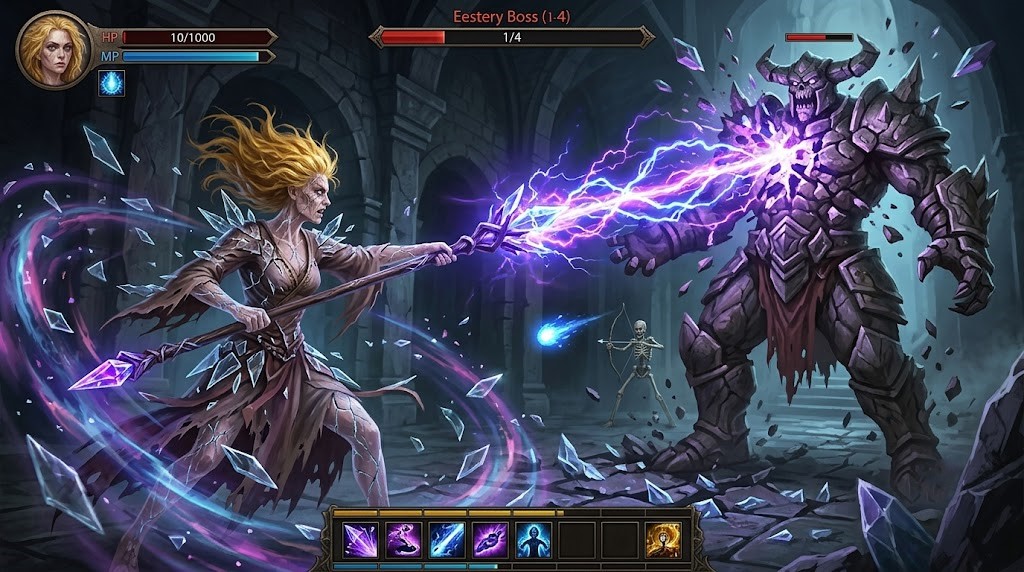
On paper, a build is just the stuff you equip. In practice, it’s the difference between carrying your team and getting flamed in all-chat. I’ve watched pro matches where the entire draft revolved around one player’s build path. That’s how serious it gets.
Why Build Hit Different
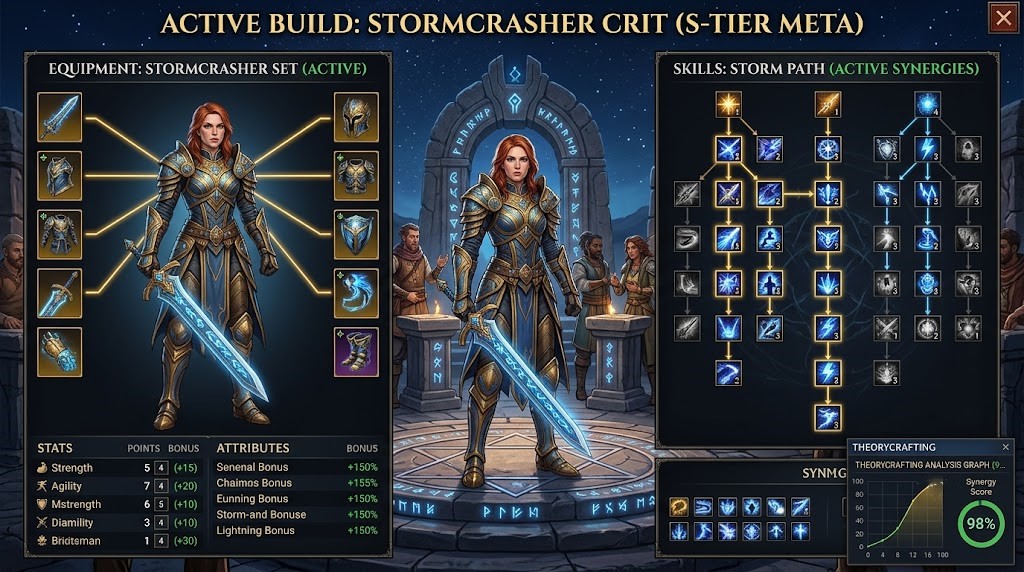
Build culture is the heart of min-maxing. It’s where theory meets practice. You can have the same character as someone else, but if your build is different, you’re playing a completely different game. In Diablo, a fire sorcerer and a lightning sorcerer might as well be different classes. In Fortnite, your build determines whether you’re a ramp-rushing maniac or a box-fighting turtle.
The term comes from “building” a character—constructing it piece by piece. But gamers turned it into a noun. “What’s your build?” is the most important question in any RPG lobby. It determines your role, your damage, your survivability. A bad build can make a great player look terrible. A meta build can make a mediocre player look competent. It’s the great equalizer and the great divider.
Esports teams have build coaches now. That’s how serious it is. When a nerf hits a core item, entire builds collapse. The community scrambles. Reddit fills with math. New builds emerge. It’s an ecosystem of optimization that never sleeps. Your loadout in an FPS is similar, but builds in RPGs have more variables. More ways to be wrong. More ways to be brilliant.
Build in Real Conversations
Pre-raid Discord: “what’s your build for tonight” “full crit, zero survivability” “so the usual” “yeah but this time it’s intentional”
Meanwhile in Twitch chat: “streamer is running a meme build” “it’s working somehow” “5Head build” “it’s not a build it’s a cry for help”
Post-patch Reddit thread: “RIP my build” “just adapt lol” “I spent 40 hours farming for that item” “and now it’s trash” “F”
How Build Became a Thing
“Build” as a gaming term started in tabletop RPGs. You “built” your character during session zero—rolling stats, choosing skills, picking equipment. When computer RPGs arrived in the 80s and 90s, they kept the concept but added complexity. Talent trees, skill points, gear sets. The number of possible builds exploded.
MMOs in the 2000s turned build optimization into a community sport. World of Warcraft talent calculators let players theorycraft without even logging in. Forums dedicated thousands of posts to “the perfect build.” The term shortened naturally. “Character build” became just “build.” Now it’s universal. Even mobile games have builds. Even buff-dependent team compositions are called builds. The word escaped RPGs and entered any game with customization.
FAQ
Is a build the same as a loadout?
Close, but not identical. A loadout is usually your gear for one match or mission. A build is your entire character philosophy—skills, stats, gear, playstyle. Loadouts are tactical. Builds are strategic. You can swap loadouts between rounds. Changing builds usually means starting over or respeccing.
Can any character have a good build?
Technically yes, practically no. Some characters are designed around specific builds. Others are flexible. The community figures out what’s optimal pretty fast, and if your favorite character’s best build doesn’t match your playstyle, that’s when the real pain begins. Ask any off-meta ensoiast.
How do you explain builds to a non-gamer?
Tell them it’s like choosing a major in college, but for your video game character. Every choice opens some doors and closes others. A “good build” is one where all your choices work together instead of fighting each other. And yes, just like college, you can usually change it if you hate it—but it costs money.