Trajectory & Chronology
The origins of ‘boss’ trace back to 19th-century American English where it meant a supervisor or person in charge, before gaming adopted it in a completely different sense. The first known use of ‘boss’ in video games appeared in the 1980 arcade game Space Panic, where a stronger green alien was labeled ‘Boss’ in the official documentation. But the concept truly took off with Nintendo’s Donkey Kong in 1981 — the giant ape at the top of each stage became the template for what a video game boss should be. By the mid-1980s, terms like ‘boss fight,’ ‘mini-boss,’ and ‘final boss’ were standard vocabulary. Japanese RPGs in the late 80s and early 90s — games like Final Fantasy and Dragon Quest — elevated boss battles into cinematic events with their own music, mechanics, and story significance. The term has since expanded into non-gaming contexts, with ‘boss fight’ used metaphorically for any major challenge.
GEBILAOWANG: Boss fights are why we play games. Nobody remembers the hundred grunts they mowed down, but everyone remembers their first Ornstein and Smough fight.
Socio-Cultural Gain
‘Boss’ represents one of gaming’s most enduring design concepts — the climactic challenge that tests everything a player has learned. Boss fights have evolved from simple damage sponges into complex multi-phase encounters that tell stories through gameplay. The cultural impact extends beyond games: ‘boss fight energy’ describes tackling a major life challenge, and ’this is the final boss of [task]’ has become internet shorthand. Speedrunning culture revolves heavily around boss optimization, with communities spending thousands of hours finding the fastest ways to defeat iconic bosses. The ‘boss music’ meme — playing dramatic music before a difficult task — shows how deeply the concept has penetrated internet culture. Bosses also serve as shared cultural touchpoints; mention ‘Malenia’ to any 2020s gamer and you’ll get an immediate reaction.
High-Fidelity Contextual Dialogues
Scene: Matchmaking lobby, pre-dungeon
Player A: “Anyone know the boss mechanics for this one?” Player B: “Phase one is easy, phase two he does a one-shot AoE.” Player C: “first time?” Player A: “Yeah just hit max level.” Player B: “Stick with me during phase two, I’ll call out the safe zones.” Player C: “or just git gud” Player B: “Ignore them, we’ll get it.”
Scene: Voice comms during a raid
Raid Leader: “Boss at 10%, everyone burn cooldowns!” DPS: “Popping everything!” Healer: “I have no mana but we’re doing this!” Raid Leader: “AND HE’S DOWN!” Everyone: “LET’S GO!” New Guy: “That was my first boss kill…” Veteran: “Welcome to the addiction.”
Scene: Discord, friends planning a gaming session
Sam: “What are we playing tonight?” Riley: “That new RPG. I heard the final boss is insane.” Sam: “Difficulty?” Riley: “Took streamers 40+ attempts.” Sam: “So we’re not sleeping tonight.” Riley: “Coffee’s brewing already.”
FAQ
When do you use ‘boss’?
Use ‘boss’ to refer to any powerful enemy character that serves as a major challenge in a game. It can describe the enemy itself (“that boss has three phases”), the fight (“the boss battle took 20 minutes”), or be used metaphorically outside gaming (“this exam is the final boss of the semester”).
Is ‘boss’ the same as ’enemy’?
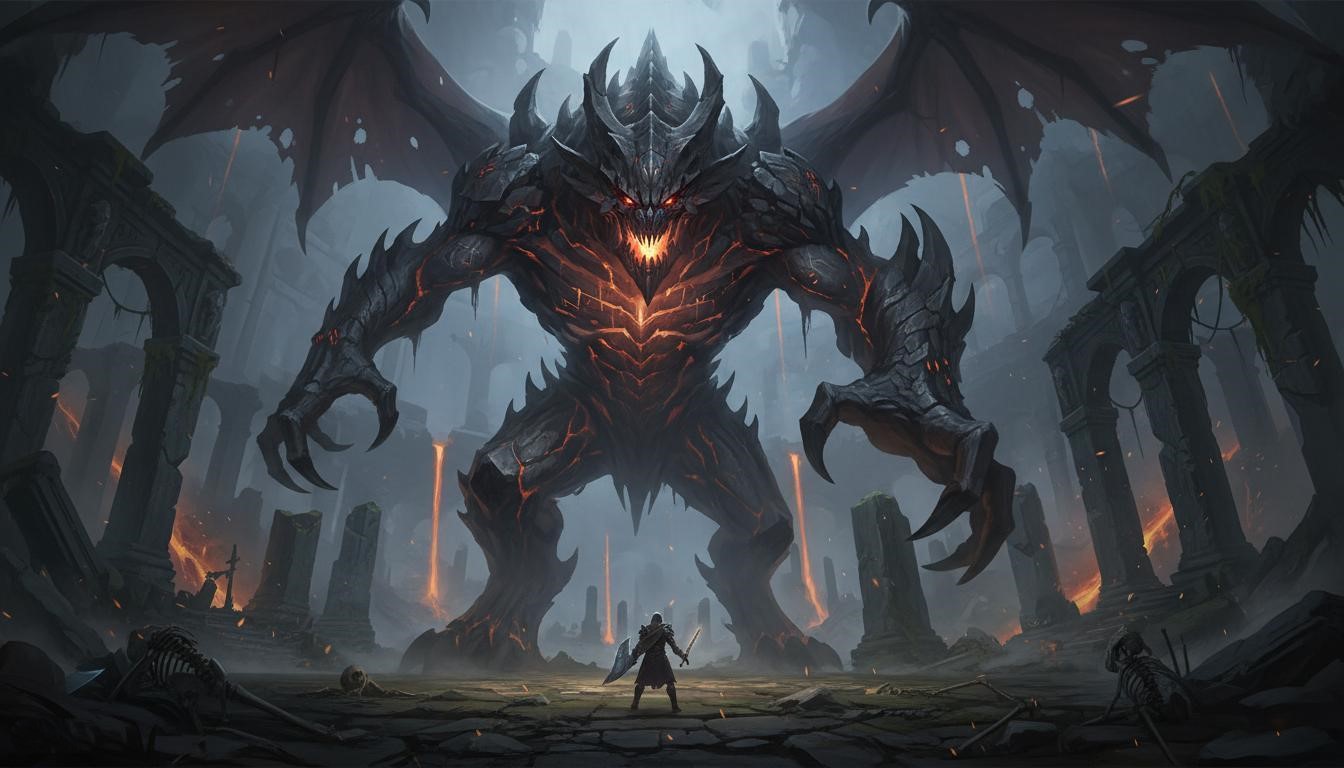
Not exactly. Regular enemies are standard fodder that players defeat in large numbers. A boss is a unique, powerful enemy with more health, complex mechanics, and often their own music and arena. Bosses are designed to be major challenges, while regular enemies are obstacles along the way. Some games also have ‘mini-bosses’ — tougher than regular enemies but not as difficult as main bosses.
Is ‘boss’ still used in 2026?
Absolutely. Every game with combat features bosses, from indie platformers to massive RPGs. Recent titles like Elden Ring DLC, the latest Final Fantasy games, and AAA action-adventures continue the tradition of epic boss battles. The term is also widely used outside gaming, showing no signs of fading.
How do you explain ‘boss’ to a non-gamer?
“In video games, a boss is like the final exam at the end of a chapter — it’s a much harder challenge that tests everything you’ve learned so far. Bosses are usually bigger, have special abilities, and require strategy to defeat. They’re the highlight of most games.”