High-Fidelity Contextual Dialogues
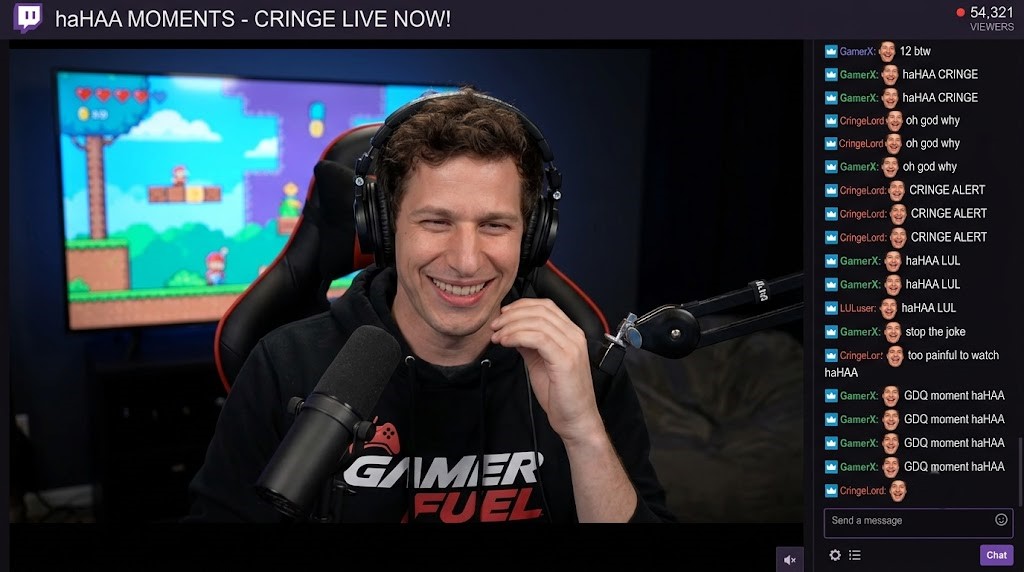
Scene: Twitch chat, streamer shares unpopular opinion
Streamer: “Unpopular take: Minecraft hunger games was better than battle royales” Chat: “based” Chat: “extremely based” Chat: “BASED ASF” Chat: “finally someone said it”
Scene: Discord, friend shuts down a troll
Kai: “Some guy in all-chat told me to kill myself because I main support” Ryan: “What’d you say back?” Kai: “Nothing. Just kept playing support and we won.” Ryan: “That’s based honestly. Never let them live rent free.”
Scene: Reddit, r/gaming unpopular opinion thread
User1: “I still prefer single-player games over live service. No FOMO, no battle pass, just a complete experience.” User2: “Based take in 2026” User3: “Single-player gamers are the last based gamers” User4: “this but unironically”
Scene: Post-game lobby, player gets flamed for off-meta pick
Player1: “Why’d you pick that? It’s terrible” Player2: “Because it’s fun” Player1: “We’re in ranked” Player2: “And I’m having a great time. Based > meta.” Player3: “…I respect that actually”
Trajectory & Chronology
Based entered gaming culture through a fascinating linguistic reclamation. The term originally meant the opposite of what it means today — in 1980s West Coast street slang, “based” described someone addicted to freebase cocaine (“basehead” shortened to “based”). Rapper Lil B (Brandon McCartney) encountered the term as an insult growing up in Berkeley, California, and deliberately flipped its meaning in the late 2000s.
Lil B’s 2007 album with The Pack, “Based Boys,” marked the first major deployment of the reclaimed term. In a now-famous 2010 Complex magazine interview, he explained: “Based means being yourself. Not being scared of what people think about you. Not being afraid to do what you wanna do. Being positive.” He fully embraced “The BasedGod” as an alter ego, building an entire mythology around based living that included based cooking, based freestyles, and the legendary “Based God’s Curse” on Kevin Durant.
The term’s journey into gaming happened through 4chan and Reddit in the early 2010s. The alt-right briefly appropriated “based” as ironic praise for conservative figures (“Based Mom” Christina Hoff Sommers during Gamergate), but the term proved too versatile to stay political. By the late 2010s, “based” had returned to Lil B’s original meaning — authentic, confident, unbothered by judgment — and spread into mainstream gaming vocabulary through streamers and content creators.
By 2026, “based” is firmly established as gaming’s preferred compliment for someone who stays true to themselves. Merriam-Webster added a definition in July 2026, tracing its path from “basehead” insult to Lil B’s reclamation to modern usage. The term’s durability comes from its flexibility — it works as an adjective (“that’s based”), an interjection (“Based!”), and even a hashtag (#Based), making it one of the most linguistically adaptable terms in gaming culture.
GEBILAOWANG: Lil B took an insult about crack addiction and turned it into the highest compliment in gaming. That’s the most based origin story possible.
Socio-Cultural Gain
Based fills a unique gap in gaming’s emotional vocabulary. Before “based,” gamers didn’t have a concise way to praise authenticity without also implying skill or success. “GG” acknowledges good play. “Clutch” celebrates performance under pressure. But “based” compliments someone’s character — their willingness to be themselves, hold unpopular opinions, or play what they enjoy regardless of meta or peer pressure.
This distinction matters in gaming culture, where conformity pressure is intense. Meta slaves, tier-list worshippers, and trend-followers dominate most competitive spaces. Calling someone “based” is a small act of rebellion against that conformity — it says “I see you doing your own thing, and I respect it.” This has made “based” particularly popular in casual gaming communities and among content creators who build brands around authenticity.
The term also carries interesting generational baggage. Older gamers who remember “based” as a crack reference sometimes find its modern usage jarring, while younger gamers who learned it through Lil B and Twitch have no association with the original meaning. This creates occasional miscommunication, but also demonstrates how effectively Lil B’s reclamation worked — the negative meaning has been almost entirely erased for anyone under 30.
FAQ
Q1: What’s the difference between based and Chad?
“Chad” describes traditional masculinity and dominance — winning, being muscular, getting girls. “Based” is broader and more philosophical. A based person might be a Chad, but they might also be a quiet support main who ignores meta and plays what they love. Based is about authenticity, not dominance. You can be based while losing badly — in fact, stubbornly playing off-meta in ranked is often considered peak based behavior.
Q2: Who is Lil B and why does he matter for gaming?
Lil B (Brandon McCartney) is a Berkeley rapper who coined the modern meaning of “based” in the late 2000s. While not a gamer himself, his reclamation of the term created the linguistic foundation that gaming culture later built on. His “Based God’s Curse” on NBA player Kevin Durant became an early internet meme that helped spread the term beyond hip-hop. Gamers essentially adopted a hip-hop term and made it their own, which is a common pattern in internet slang evolution.
Q3: Is based still used in 2026?
Yes, and it’s arguably more naturalized than ever. Merriam-Webster added it in July 2026, and it’s become so common in gaming that many users don’t even register it as slang. “Based” has reached that rare status where it feels like standard vocabulary rather than trendy jargon. Its longevity compared to faster-burning slang terms (like “skibidi”) suggests it fills a genuine communicative need that isn’t going away.