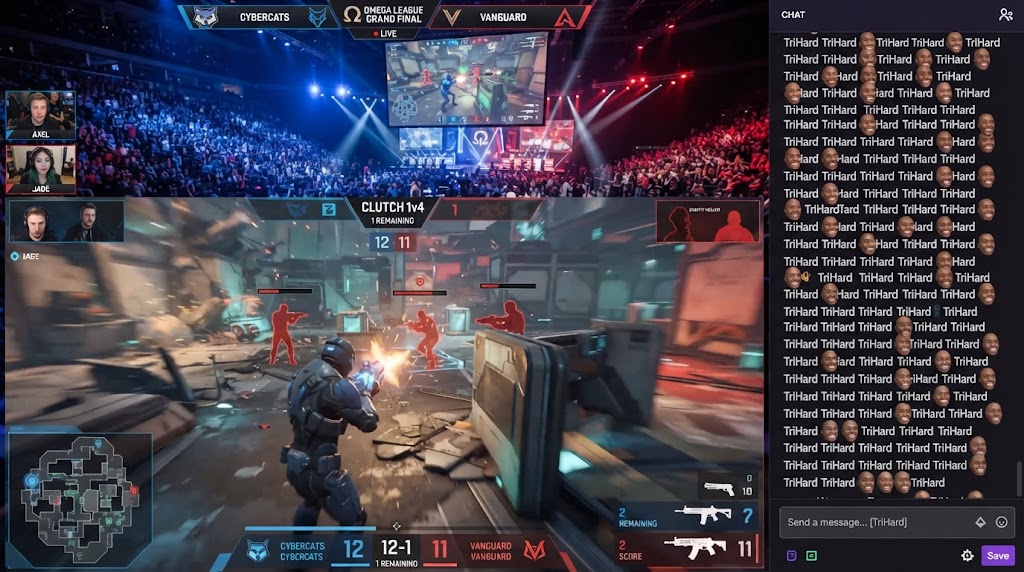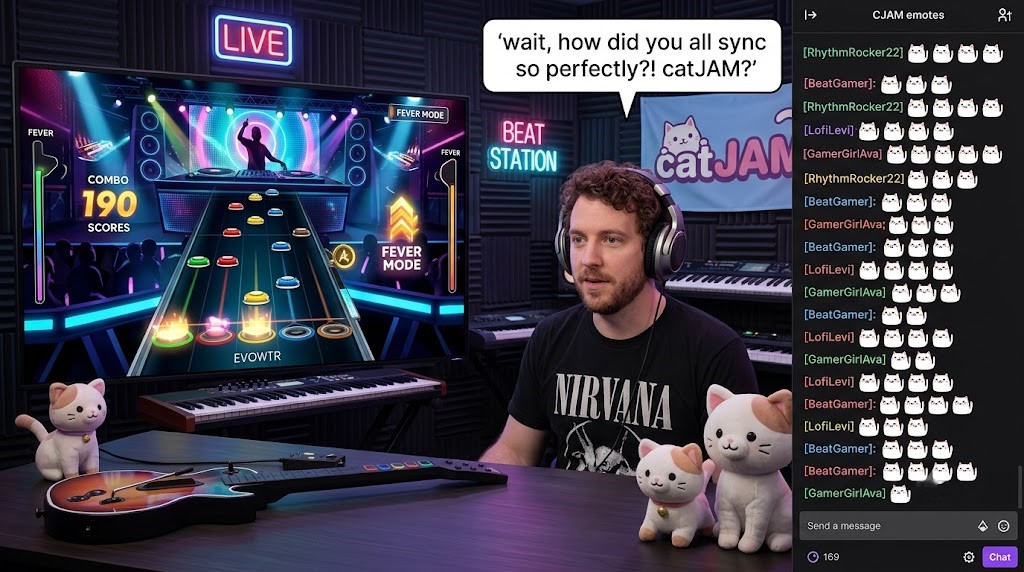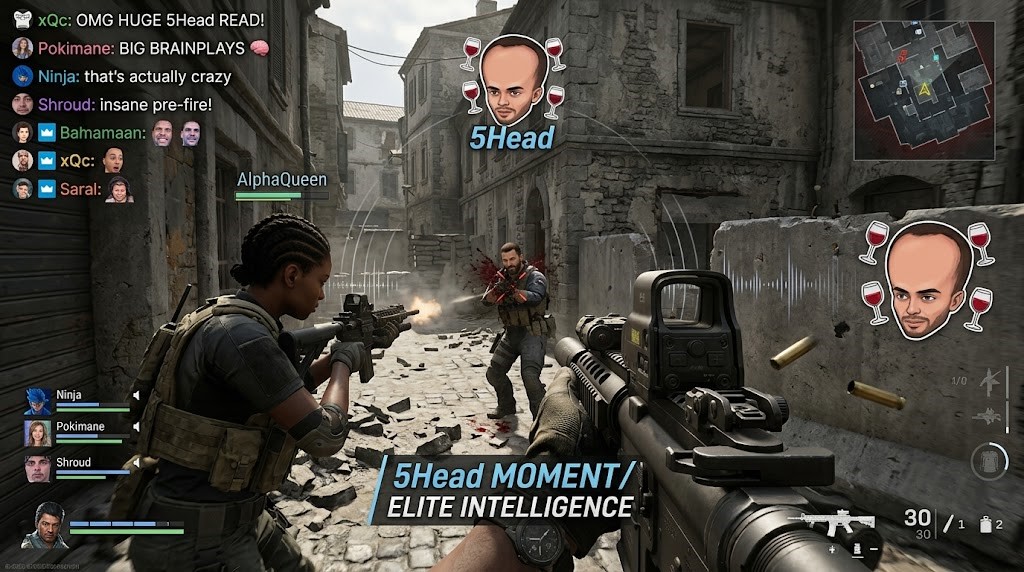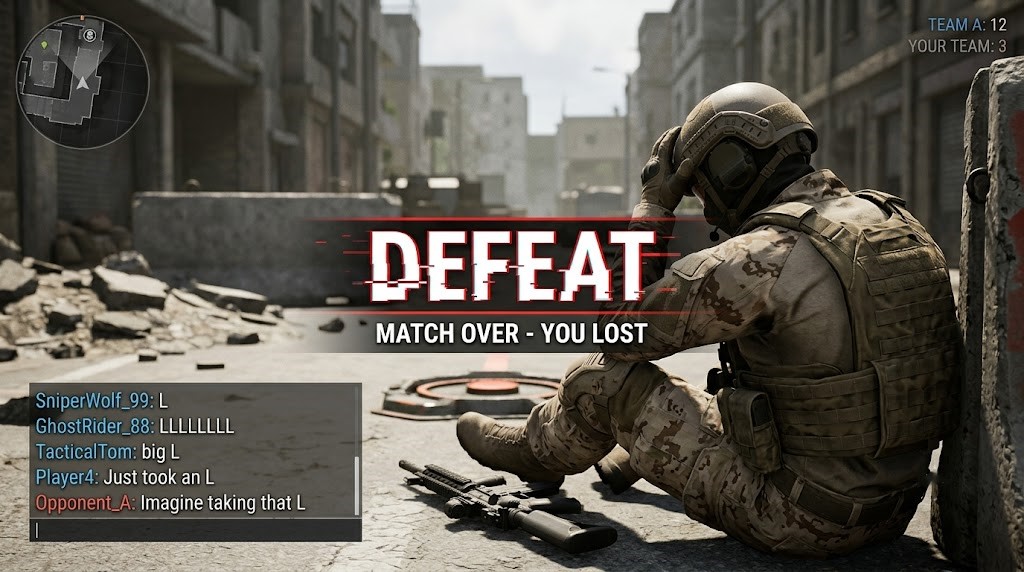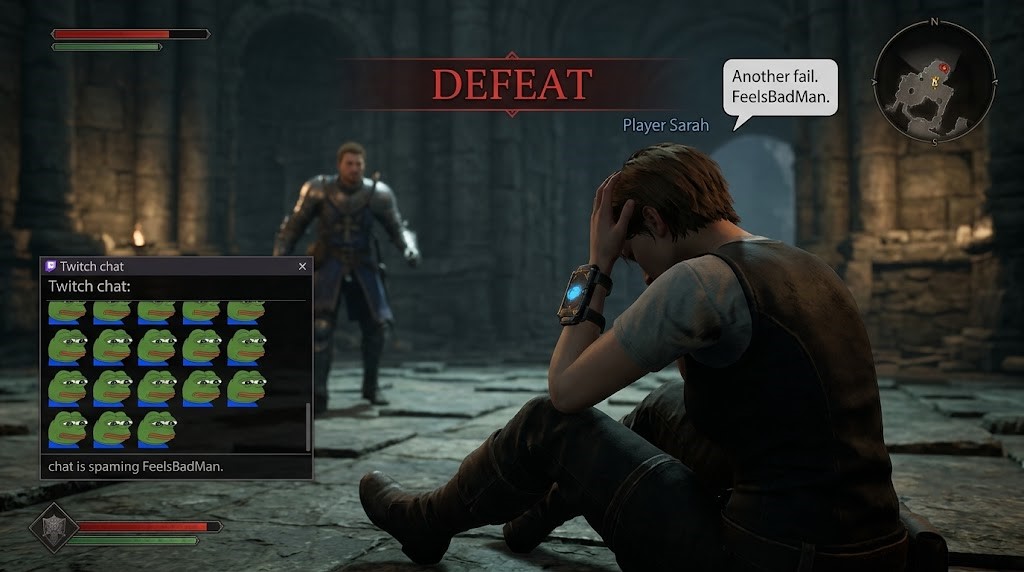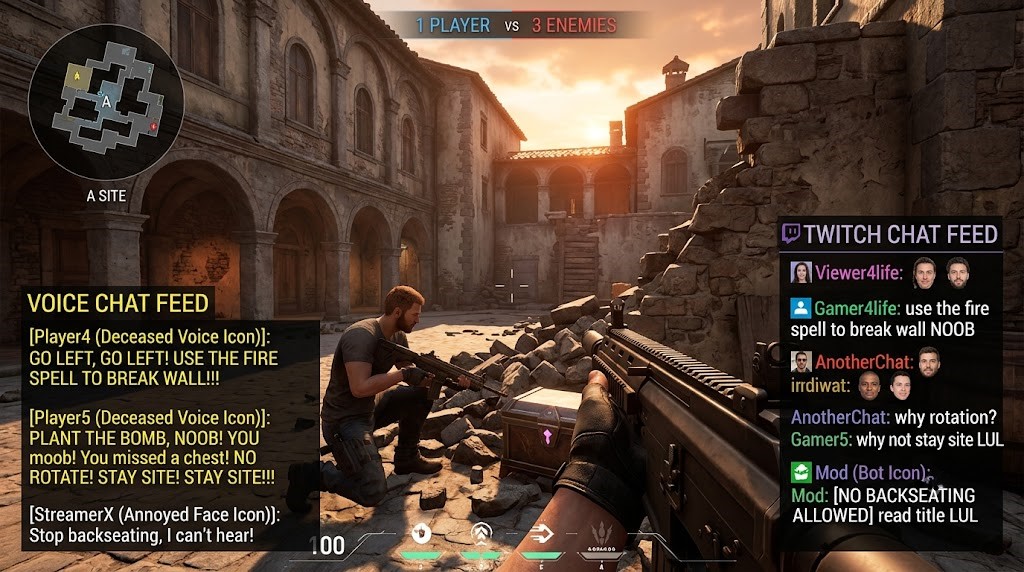
If you’ve spent any time in Twitch chat, you’ve seen backseat gaming. Probably too much of it. Somebody’s doing a blind run, they walk past the obviously glowing lever, and three thousand people lose their minds at once. Half of chat starts typing instructions nobody asked for. That’s the whole disease.
How You’ll Hear It Used
Backseat gaming examples you already know by heart.
Blind playthrough, final puzzle, chat physically can’t help itself:
Chat: THE LEVER. PULL THE LEVER Chat: he walked past it AGAIN Streamer: Stop telling me what to do, I want to figure it out myself. Chat: “no backseating” is literally in your title bro
Same energy, no stream required. You’re on a friend’s couch watching them fight a boss in Elden Ring:
“Roll left. No, LEFT. Okay, now heal. Why didn’t you heal?” “Do you want the controller?” “…no.” “Then let me die in peace.”
How Backseat Gaming Became a Thing
The backseat gaming origin is a straight lift from backseat driving, the passenger who narrates your every turn. Inverse traced the gaming version to an Urban Dictionary entry from 2006, back when it mostly meant your roommate hovering over your Halo match. Then Twitch happened, and suddenly one player had ten thousand passengers, all typing at once. GameTree’s glossary flat-out lists it among streaming’s most hated habits. Honestly, fair.
New streamer trap: banning the word instead of the behavior. “Heal first, then ult” is info. “You HAVE to go left now, trust me” is a felony. Moderate the second, spare the first.
Why Backseat Gaming Stuck Around
Every streamer has a bit about it. Some lean in and let chat “drive”; others swing the timeout hammer. It survives because chat isn’t going anywhere. Half the time it’s ironic — Kappa attached, closer to trolling than coaching. My rule after years in chat: info is a callout, orders are backseat. “Two enemies on B” helps. “Rotate to B right now” grabs the controller. One earns thanks, the other earns a ban. Why do gamers say backseat gaming with such venom? Because everybody’s been both the driver and the passenger.
FAQ
Backseat gaming vs a callout: how do I tell them apart?
Short answer: info versus orders. A callout tells you what’s happening (“sniper top mid”). The other flavor tells you what to do about it (“why aren’t you rotating”). One wins rounds. The other wins timeouts. So what does backseat gaming mean in practice? The line between helping and grabbing.
Where does it happen the most?
Honestly? Twitch chat and Discord watch parties, in that order. Anywhere one person holds the controller and a crowd holds opinions. Blind puzzle runs and fighting game streams are ground zero.
What do I tell someone who doesn’t game at all?
Tell them it’s backseat driving with a keyboard. Everybody knows the passenger who narrates your driving. Same guy, except now he’s one of 50,000 strangers yelling at a streamer who just wants to enjoy a puzzle.