AFK

AFK

slang
Updated Jul 3, 2026 5 min read
general history mmo chat essential

What Does "AFK" Mean?

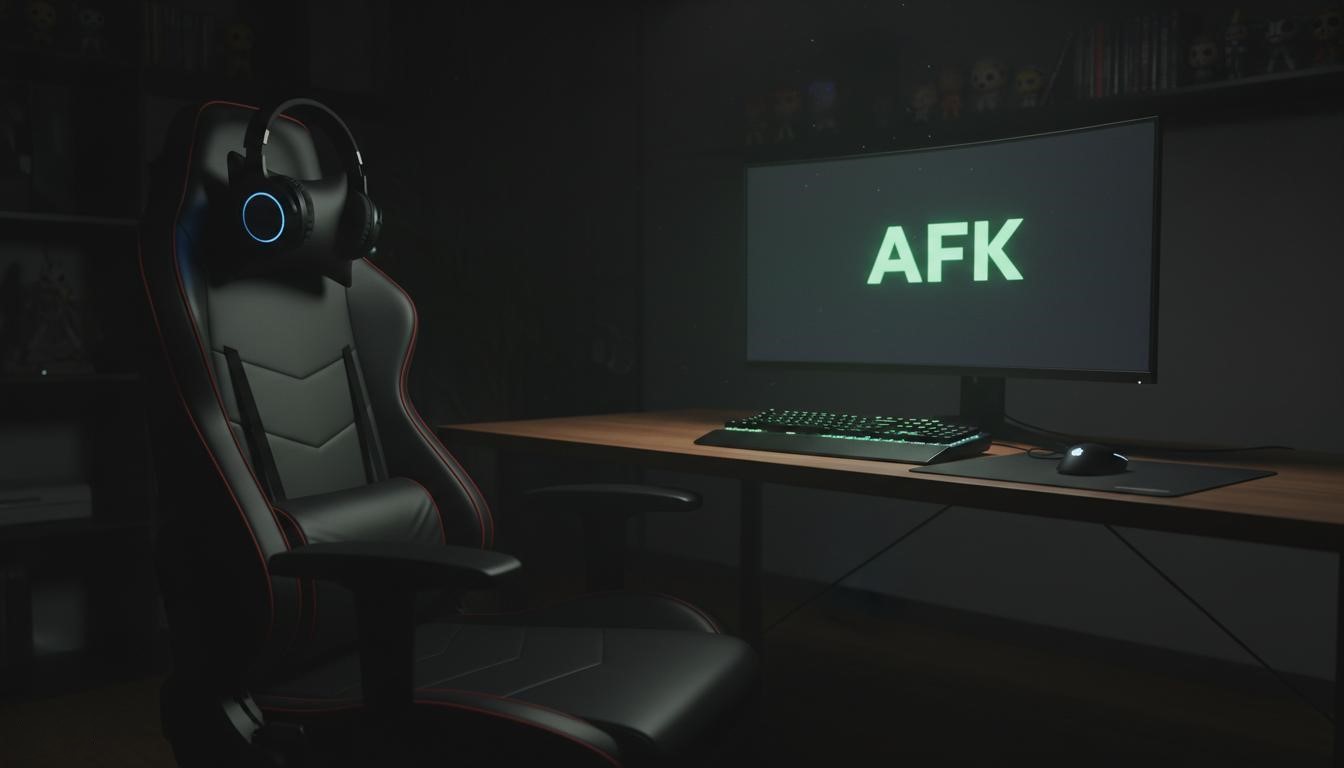
AFK stands for “Away From Keyboard” — one of the oldest and most universally recognized terms in online gaming culture. It signals that a player has temporarily stepped away from their device and may not respond to in-game communication. While it originated in PC gaming culture, it has transcended platforms and is now used across console gaming, mobile apps, Discord, and even workplace Slack channels.

The abbreviation serves as a lightweight social contract — it tells teammates, “I’m still here, but don’t expect immediate responses.” However, as competitive gaming has evolved, AFK behavior has become a contentious issue, with automated detection systems and penalties designed to discourage players from going idle during crucial moments.


Trajectory & Chronology

The origins of AFK can be traced back to the earliest days of internet communication. According to the SpawnPoint Gaming Glossary (2026), the term first surfaced in Bulletin Board Systems (BBS) and Internet Relay Chat (IRC) rooms during the late 1980s and early 1990s.

At the time, internet connections were slow and expensive, so users needed a quick way to explain why they weren’t responding to messages. “AFK” became the standard shorthand, alongside other early internet abbreviations like BRB (“Be Right Back”) and BBL (“Be Back Later”).

Key Evolution Milestones:

  • 1996–2004: MMORPGs like Ultima Online, EverQuest, and World of Warcraft catapulted AFK into mainstream gaming vocabulary. In cooperative dungeon raids, where team coordination was essential, players going AFK without warning could wipe the entire party.
  • 2005–2010: AFK expanded beyond PC gaming as console online multiplayer (Xbox Live, PlayStation Network) became standard. Players began using AFK even when they weren’t physically at a keyboard — using controllers on couches.
  • 2011–2018: Streaming culture on Twitch and YouTube normalized AFK moments. Streamers going AFK for bathroom breaks or food deliveries became a common, relatable occurrence for viewers.
  • 2019–2026: With the rise of Discord and persistent online social spaces, AFK usage expanded beyond gaming. Discord servers added “AFK voice channels” automatically moving inactive users. Corporate Slack channels saw ironic usage of AFK for coffee breaks.

GEBILAOWANG: The trajectory of AFK mirrors the broader evolution of internet culture — what began as a practical necessity for dial-up modem users has become a universal social signal across every digital platform.


Socio-Cultural Gain

AFK carries significant social weight in gaming communities. Unlike simply disconnecting without warning (known as a “rage quit” or “DC”), going AFK with proper notification demonstrates basic social etiquette.

In cooperative team games like Overwatch, Valorant, or League of Legends, a player going AFK during a ranked match can mean a guaranteed loss for their team. This has created what researchers call “AFK anxiety” — teammates monitoring each other’s activity, ready to report idle players to automated moderation systems.

Modern AFK Detection Systems:

GameAFK Detection MethodPenalty
League of LegendsInactivity timer + no input detectionLeaverBuster queue, temporary bans
ValorantNo movement/ability usage for 2+ roundsRanked penalties, XP reduction
Overwatch 2No combat participationCompetitive suspension, SR loss
Genshin ImpactAuto-kick after 30 min idleDisconnected from server
World of WarcraftAFK flag in battlegroundsMarked for PvP reporting

The cultural conversation around AFK has shifted over time. Early internet communities were forgiving — “lag” and “AFK” were accepted realities of dial-up connections. Modern competitive gaming communities, however, are far less tolerant. A player going AFK in a ranked Valorant match is likely to face immediate reports, angry messages, and automated penalties.


High-Fidelity Contextual Dialogues

Scene: Discord voice chat during a World of Warcraft raid

Player A: “brb afk 2 mins, pizza’s here”

Player B: “Roger, we’ll hold the boss at phase 2”

Player C: “Don’t take too long, we’re on a timer”

Scene: Team chat after an AFK player returns to a Valorant ranked match

Player A: “Sorry was afk, what did I miss?”

Player B: “We lost the round because you were afk. Reported.”

Player C: “Dude don’t go afk in ranked, that’s throwing”

Scene: Casual conversation between friends on Discord

Friend 1: “Why did you go afk mid-match?”

Friend 2: “Doorbell rang, delivery guy needed a signature”

Friend 1: “Classic afk timing. At least it wasn’t a clutch round.”


FAQ

Q1: How long is considered acceptable to be AFK?

In casual game modes or private lobbies, being AFK for 2–5 minutes is generally acceptable if you announce it beforehand. In ranked competitive modes, any AFK period is considered unacceptable and may result in penalties.

Q2: Can I get banned for being AFK?

Yes. Most competitive games with automated moderation systems (League of Legends, Valorant, Overwatch 2, Apex Legends) track AFK behavior. Repeated offenses can lead to temporary suspensions, ranked restrictions, or permanent account bans.

Q3: What’s the difference between AFK and DC?

AFK (Away From Keyboard) means you’re still connected to the game but not actively playing. DC (Disconnected) means you’ve lost connection to the game server entirely. AFK is usually intentional; DC is usually technical.

Q4: Do console players say AFK even though they don’t use keyboards?

Yes. Despite originating in PC gaming, AFK has become platform-agnostic. Console players, mobile gamers, and even VR users say “AFK” to indicate temporary absence, regardless of input device.


Sources

  1. SpawnPoint Gaming Glossary (2026) — Comprehensive gaming terminology database
  2. League of Legends Community Guidelines — AFK Policies
  3. Discord Blog — AFK Channel Feature Release
  4. Urban Dictionary — AFK Definition
  5. WoW Wiki — Battleground AFK Reporting System

About the Author: This guide was compiled and written by GEBILAOWANG, an independent gaming culture researcher and lexicographer specializing in gaming slang, esports terminology, and online communication patterns. If you have suggestions for new terms or corrections, feel free to reach out.

By GEBILAOWANG

Independent gaming culture researcher and lexicographer specializing in gaming slang, esports terminology, and online communication patterns.